
What actually happened?
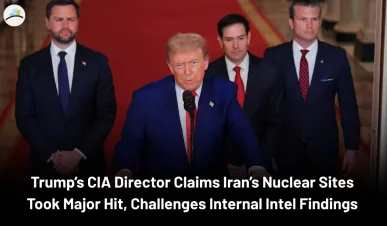
So, here’s what went down. At the NATO summit recently, President Trump said the airstrikes the U.S. carried out on Iran’s nuclear sites were a huge success. He used words like “obliterated” and “completely destroyed” to describe what happened. But soon after, reports started to come out from U.S. intelligence suggesting that Iran’s nuclear facilities weren’t actually that badly damaged. Some of them, apparently, could be up and running again fairly quickly.
Trump didn’t take that lightly. In fact, he pushed back hard—calling those reports “fake,” saying they were part of a media game, and insisting the mission was fully successful. He even brought in some praise from Israeli and agency allies to back up his claims. This whole thing has now turned into a full-on argument: who’s right, and who’s controlling the story?
CIA says strikes 'severely damaged' Iranian nuclear sites; White House to limit sharing intel with Congress
— WION (@WIONews) June 26, 2025
Secretary of Defence Pete Hegseth to hold press conference on US strikes in Iran@shivanchanana gets you this report by @susanmtehrani pic.twitter.com/mVGOLGVrRU
Why it’s not just about the strikes
At first glance, this might look like a simple disagreement between a president and his advisors. But honestly, it’s way deeper than that. When a president dismisses his own intelligence reports in front of world leaders, it shakes confidence—both inside and outside the country.
For one, it creates confusion. If intelligence agencies say one thing and the president says another, who are we supposed to trust? That kind of public divide can damage the credibility of the entire government.
Also, if intelligence experts start to feel like they can’t speak freely—or that their work will be thrown out if it doesn’t match the president’s narrative—that could mess with how accurate future reports are. And when it comes to national security, facts matter.
What's not being discussed enough
There’s a lot happening beneath the surface here that isn’t getting enough attention:
-
Allies might start to lose trust: Countries that work closely with the U.S. rely on American intelligence. If they start thinking it's being twisted or controlled, they might not want to share or rely on it like before.
-
It could change how future decisions are made: If intelligence reports keep getting sidelined, future military actions might happen without the full picture. That’s risky.
-
Iran could feel provoked: If Iran believes the U.S. is exaggerating or lying about the damage, it might push them to act—whether that’s restarting their nuclear program or reacting with cyberattacks or through their allies in the region.
We've seen this before
This isn’t the first time a president has gone head-to-head with the intelligence community. Remember the whole weapons of mass destruction thing in Iraq back in 2003? That was a case where flawed or misused intelligence led to a war, and trust in U.S. intelligence took a big hit.
Also, during Nixon’s time and even in the Reagan years, there were moments when leaders tried to shape how intelligence was presented to support a political goal. But when the truth came out later, it always caused bigger problems—both at home and abroad.
More Articles:
So what happens next?
-
U.S. intel might push back quietly: There could be more leaks or anonymous reports that aim to set the record straight. That always happens when people inside feel like their work is being ignored or misused.
-
Allies may demand proof: Other NATO countries and partners might start asking for their own evidence, especially if they’re expected to support U.S. policy or join future military action.
-
The media will dig deeper: Investigative reporters are likely already working on verifying the real impact of the airstrikes using satellite data, expert sources, and more.
This moment might feel like a PR fight, but it’s really a test of how the U.S. handles truth in times of conflict.
Why this matters to all of us
It’s not just about politics—it’s about trust. If Americans and U.S. allies can’t rely on official intelligence anymore, we’re in trouble. Because without trust, it's hard to make informed decisions—whether you're running a government, a military operation, or even voting in the next election.
Also, if leaders keep shaping facts to match their version of events, the line between truth and spin disappears. And that’s when bad decisions happen.
Final thought
Trump’s showdown with intelligence agencies might seem like just another headline, but it touches everything—from military strategy and global diplomacy to how much trust we place in those leading the country. If this becomes the new normal—where facts are flexible depending on who's in charge—we could be heading into very uncertain territory.



