
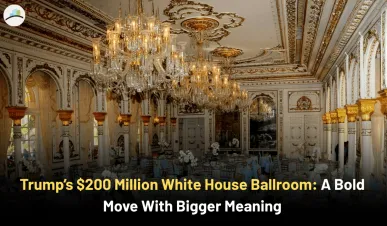
A New Ballroom Is Coming to the White House
President Trump is going ahead with something he’s been wanting for a while—a big, luxurious ballroom right inside the White House complex. It’ll cost around $200 million and sit on the East Wing side. This new space is supposed to hold up to 650 people, way more than the current East Room can handle. It’s the biggest addition to the White House since the Truman era, and Trump’s paying for it mostly through private money, including some from himself and close donors.
Now, whether you think it’s necessary or not, this isn’t just about a fancy new room. It’s about how Trump wants to leave his mark—not just through policy but through the actual building itself. He’s not hiding it either. This is about his version of presidential power, and honestly, it’s the kind of bold move that gets people talking, whether they agree with it or not.
He's turning it from *our House* to HIS House.
— THEE Discowitch Fella 🏳️🌈🏳️⚧️🇨🇦🇺🇸🇺🇦🇬🇪 (@gothicdisco) July 31, 2025
You think he's planning on letting us vote him out of his gold-encrusted new digs? Please.
Trump's $200M White House ballroom leaves critics aghast: 'Can’t afford pediatric cancer?' https://t.co/4cXRMtP76d
It’s Not Just About Looks—There’s a Bigger Purpose
On the surface, it looks like a flashy project. Gold touches, chandeliers, big pillars—it sounds like something you’d see at one of Trump’s hotels. But if you dig a little deeper, it does serve a purpose. Right now, big events at the White House usually spill outside into tents. This ballroom means state dinners, award events, and official receptions can finally happen indoors in one big space. It’s more practical than people give it credit for.
At the same time, it definitely reflects Trump’s personal taste. Critics say it feels more like Mar-a-Lago than the White House. But his supporters? They love it. They say it brings back a kind of old-school, grand style that fits how Trump sees leadership—big, bold, and unapologetic.
Some Questions That Still Haven’t Been Answered
There are a few things that haven’t been fully explained yet, and they matter. First, we still don’t know exactly who’s donating the money for this. Trump said it’s all privately funded, but without names or details, it raises questions. If major donors are involved, people want to know what kind of influence or access they might expect in return.
Also, this whole project sets a pretty big precedent. What happens if future presidents want to add or change parts of the White House with donor money too? Does it open the door for more private influence in what’s supposed to be a national symbol? These are fair concerns, and it’s surprising they’re not being discussed more publicly.
MORE ARTICLES:
Trump’s Vision Versus White House Tradition
One thing’s clear—this move breaks with tradition. Most presidents don’t change the physical space of the White House unless absolutely necessary. They try to preserve its history, not leave their personal style behind. Trump’s not doing that. He’s leaning into his identity as a builder, and this ballroom is basically a permanent stamp of his time in office.
That’s not just about ego. It’s about legacy. For Trump, this project isn’t just something for his administration—it’s something that might outlast every policy or headline. Whether you like him or not, he’s making a physical change that future leaders will have to walk past, work around, or use.
This Project Says a Lot About Where Politics Might Be Heading
In a way, the ballroom tells us something bigger about how politics works today. Presidents don’t just lead with laws—they shape stories and images. Buildings. Speeches. Symbols. And this ballroom, as strange as it might seem, is part of that. It’s a space designed to reflect a certain kind of leadership—one that’s grand, direct, and very much centered on personality.
But it also raises the stakes. If donor-funded renovations to national landmarks become normal, we’ll need stronger rules about transparency, ethics, and public input. Because while this ballroom might look like just a room, it’s really about how we see leadership—and how leadership wants to be remembered. And that matters more than a few chandeliers.



