
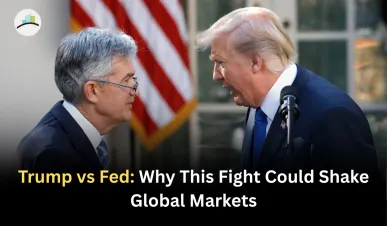
So here we are again. Just like in his first term, Donald Trump is going after the Federal Reserve. But it’s not just a few tweets this time—it feels more coordinated, more aggressive. And the stakes? They might be even higher now because he’s not just watching the economy from the sidelines. He’s actively campaigning, and if he wins, he’ll likely be in charge of reshaping the Fed—maybe even firing Jerome Powell before his term ends.
The bigger question isn’t just about personal power, though. It’s about whether America’s central bank can keep doing its job—calmly, independently, and without looking like it’s taking political orders. That’s the whole idea behind having a separate Fed. But with Trump already promising to cut rates and calling the Fed a problem, markets are listening. Investors are now pricing in politics—something that should never be a factor in central banking.
Why This Messaging Battle Feels Different
In 2018 and 2019, Trump was harsh on the Fed, but Powell and his team tried to tune him out. This time, though, it’s harder to ignore. Powell’s already facing tough decisions—high inflation, pressure to cut rates, global economic jitters—and now there’s this growing political noise creeping into the conversation.
The Fed used to speak softly, with carefully chosen words, to avoid spooking markets. Now it feels like they’re being forced to speak louder—not because they want to, but because someone else is yelling over them. And that “someone” could very well be the next president. If Trump wins and replaces Fed officials with loyalists, it could weaken the institution’s independence in ways we haven’t really seen before.
Long-Term Impact: Why This Isn’t Just About Rate Cuts
Most people think this is just about interest rates going up or down. But honestly, this goes deeper. If Trump does return and remakes the Fed in his image, it’s not just the economy that changes—it’s how the world sees American financial stability.
Think about it: the Fed is considered one of the most powerful and respected central banks globally. But if it starts looking like just another political tool, trust could slip fast. Investors, especially foreign ones, want to know that monetary policy decisions are made based on data, not campaign rallies.
There’s also the possibility that the next Fed board becomes more populist—focused more on short-term growth than long-term balance. That might feel good in the moment, but it could create more inflation, more debt, and more instability down the road.
MORE ARTICLES:
What’s Not Being Talked About Enough
One of the quieter but more important parts of this story is the signal it sends to future Fed chairs and board members. If Powell gets replaced before his term ends just because he didn’t do what the president wanted, it tells every future Fed official: toe the line or get out. That could chill independent thinking at the Fed for years.
Also, there’s a risk that the Fed, to defend its credibility, overcompensates—maybe delays needed rate cuts just to prove it’s not being bullied. That could lead to unnecessary economic pain. It’s like walking a tightrope with wind gusts coming from both sides—any wrong step could throw off the whole balance.
So Why Should You Care?
Because this isn’t just about markets or politics. It’s about how the U.S. runs its economy in a world that’s watching every move. If the Fed loses credibility, it affects everything from interest rates on your mortgage to the strength of the dollar, to how other countries react in a crisis. Stability at the central bank isn’t just good for Wall Street—it’s crucial for Main Street too.
We’ve seen before what happens when trust in institutions crumbles. The scary part is, we might be heading that way again—and this time, the signals are louder than ever.



