
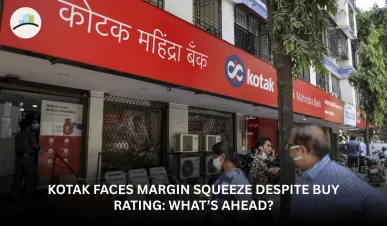
Kotak Mahindra Bank Gets Buy Call, But Is Margin Pain Just Beginning?
Kotak Mahindra Bank has caught investor attention again, this time through a fresh “overweight” rating from Morgan Stanley, even as the brokerage reduced the price target from ₹2,650 to ₹2,600. The move may seem minor, but the underlying signals are anything but small—they point to a deeper structural concern that the market is not yet pricing in.
While Kotak remains one of the cleanest balance sheets in the Indian private banking space, cracks are starting to show beneath the surface.
Why This Is Important
At first glance, a buy recommendation suggests confidence. But when the price target is cut despite reaffirmation, it sends a double message: the bank is still strong relative to others, but the macro headwinds are getting harder to ignore.
-
Net interest margins (NIMs) are shrinking as competition for deposits intensifies.
-
Loan growth is slowing, especially in urban retail pockets, where Kotak is dominant.
-
Rising NPAs hint at stress creeping in, especially in unsecured lending and SME exposure.
MORE ARTICLES:
What Is Not Being Discussed Enough?
Most media outlets are focusing on the price target or the buy call. But three critical pain points are flying under the radar:
-
Deposit Repricing Lag
Deposit rates have surged over the past year, but lending rates haven’t kept up. That lag squeezes margins in a way that’s hard to reverse unless RBI pivots aggressively. -
Structural Shift in Borrower Behavior
Consumers are delaying credit decisions. Large-ticket retail loans are seeing more defaults and slower disbursements, particularly in urban markets. -
Kotak’s Valuation Bubble
Trading at a premium to most peers, Kotak’s stock leaves very little room for error. If next quarter shows flat growth or even a minor NPA bump, expect a swift reaction from the markets.
Economic & Policy Implications
India's private banking sector is walking a tightrope: low-cost CASA deposits are drying up, while credit appetite weakens in the face of global and domestic volatility.
Kotak’s situation could trigger broader concerns in the sector:
-
RBI policy action may need to come sooner than expected to prevent a sector-wide margin squeeze.
-
Banks could shift toward riskier loans to chase yields—setting the stage for a second wave of NPA problems.
Hidden Risks and Opportunities
Risks:
-
A sharper-than-expected drop in net interest income.
-
Sudden increase in restructured or stressed retail loans.
-
Regulatory tightening on retail unsecured credit.
Opportunities:
-
Possible CRR cut later in the year could revive NIMs.
-
Flight to quality could benefit Kotak over lesser-known banks.
-
A pivot to more fee-based income may diversify revenue streams.
Historical Echoes
This margin squeeze echoes the 2011–2013 rate cycle, when banks that relied too heavily on retail growth struggled as cost of funds ballooned. The key differentiator then—and now—is how agile a bank is at shifting strategy. Kotak has the tools. The question is: does it have the timing?
Final Word
Kotak Mahindra Bank may still wear the badge of a fundamentally strong private lender, but the price target cut amid a buy rating reveals deeper undercurrents. Investors often take comfort in “overweight” tags, but this one comes with a caution label.
Shrinking margins, rising NPAs, and valuation pressure are not temporary blips—they’re signs of a changing credit cycle and tightening liquidity that could redefine how Indian banks perform over the next 12–18 months. Kotak is better positioned than many peers—but it’s not invincible.
If you're holding the stock, now is the time to look beyond the headlines. And if you're looking to enter, ask yourself: Is the upside worth the margin risk you're buying into?
Stay sharp. In this market, even quality names come with caveats.
Disclaimer:
This article is intended for informational purposes only and does not constitute investment advice. Procapitas does not provide personalized financial recommendations. Always consult a licensed financial advisor before making investment decisions. Information is based on publicly available sources as of June 2025 and Procapitas’ independent research and analysis.



