
What Just Happened?
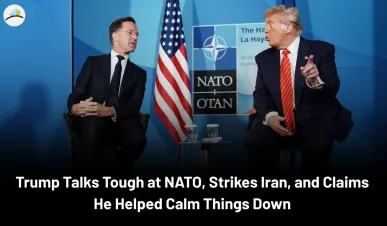
So, here’s what’s going on — Donald Trump showed up at the recent NATO summit in Belgium and did something not everyone expected. After spending years calling out NATO and even threatening to pull the U.S. out, he suddenly shifted tone and started talking about how important the alliance is. He got the other NATO countries to agree to spend more on defense — 5% of their GDP by 2035, which is quite a jump.
At the same time, he also talked about how the U.S. carried out airstrikes on Iran, hitting what he says were nuclear sites. According to him, those strikes pretty much wiped out Iran’s nuclear progress, though honestly, not everyone agrees on how much damage was actually done.
And just when things looked like they could spiral out of control, Trump claimed he helped get Israel and Iran to agree on a ceasefire — at least for now. He said the U.S., along with Qatar, helped broker the truce, though it didn’t last long because Israel reportedly started attacking again shortly after.
LIVE UPDATES: @realDonaldTrump slams Spain for refusing to increase its defense spending.
— Fox News (@FoxNews) June 25, 2025
"They want a little bit of a free ride, but they'll have to pay it back to us on trade because I'm not going to let that happen. It's unfair. It's unfair to @NATO." pic.twitter.com/rqG9h5xhse
Why He Might Be Doing This Now
If you ask me, it’s all about timing. Trump knows the 2026 elections are not far off, and this is his way of reminding people he’s still a strong player on the world stage. By taking credit for stopping a war and getting NATO to agree to more spending, he’s trying to show that he’s tough, that other countries listen to him, and that the U.S. is stronger with him in charge.
But there’s another angle too. Some experts are saying that Europe might have agreed to the 5% defense spending just to avoid more pressure from Trump. They might not even hit that number anytime soon — because many of these promises don’t always lead to action.
What Could Go Wrong?
There are a few things here that aren’t being talked about enough. One big thing is — if countries start shifting their budgets toward defense, that money has to come from somewhere. Maybe from education, health, or climate programs. So while this sounds like a big win for NATO, it might lead to cuts in other important areas.
Also, attacking Iran’s nuclear facilities without warning raises the risk of Iran hitting back, either directly or through proxy groups. It’s not just about this one airstrike — it’s about whether this will trigger more tension in the Middle East.
Another issue is trust. Trump’s history with NATO isn’t great. So even though he’s talking nicely now, some European leaders might still be cautious. It’s hard to rebuild that trust overnight.
More Articles:
What This Means for Business and the Economy
From a business point of view, the defense industry is probably loving this. If European countries start buying more military gear, U.S. companies like Lockheed Martin could see a lot of new deals. That’s great for their stock prices, obviously.
On the flip side, global investors might get nervous if the situation with Iran gets worse. Any sign of war, especially in the Middle East, usually shakes up oil markets. Surprisingly, oil prices haven’t jumped much this time, probably because the U.S. has a strong oil supply right now. But if Iran responds, that could change fast.
Also, spending more on defense means governments might have to borrow more — and that affects bond markets, interest rates, and even currencies. So yeah, a military move like this has ripple effects far beyond the battlefield.
So, What’s Next?
Right now, Trump says talks with Iran could happen as soon as next week. But honestly, nobody knows if that will really happen or if it’s just talk. Iran’s government isn’t very trusting of the U.S. after that airstrike, and even if there are talks, they won’t be easy.
Also, let’s see if these NATO countries actually follow through on their defense spending promises. Saying something at a summit is one thing. Actually doing it — that’s where the real test lies.



