
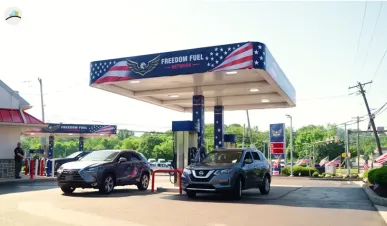
President Donald Trump has drawn national attention to a new network of Freedom Fuel filling stations, promoting the locations as an example of efforts to provide American drivers with lower gasoline prices. The stations have quickly become a topic of public discussion as motorists seek relief from rising fuel costs while industry experts debate whether the discounted pricing model can be maintained over time.
This is fucking pathetic.
— FireFighterDev (@fire_starter457) July 9, 2026
So now this admin is rebranding gas stations as “Freedom Fuel” and pretending $3.47 gas is some heroic gift from Trump?
The White House says the government is not subsidizing it and that it’s privately owned.
Then why is the White House promoting it… pic.twitter.com/CEcetFDhKd
The filling stations are privately operated and have expanded across parts of Pennsylvania and New Jersey. Their lower-than-average fuel prices have attracted long lines of customers, making the network one of the most talked-about developments in the fuel retail industry.
What Are Freedom Fuel Filling Stations?
Freedom Fuel is a privately owned chain of filling stations that aims to sell gasoline at prices below many competing retailers. The network has gained widespread recognition after President Trump publicly praised the initiative, describing it as an example of how private businesses can respond to consumer demand for more affordable fuel.
The stations feature patriotic branding and emphasize competitive pricing to attract motorists looking to reduce transportation costs during a period of higher fuel prices.
Why Are the Filling Stations Making Headlines?
The biggest reason behind the growing attention is the price difference at the pump. Several Freedom Fuel locations have advertised gasoline at prices noticeably lower than nearby competitors, encouraging drivers to travel from surrounding communities to take advantage of the savings.
As fuel prices remain an important concern for households, any retailer offering lower prices is likely to generate significant customer interest. Long vehicle lines at several locations have highlighted the strong demand for affordable gasoline.
Private Business, Not a Government Program
Although President Trump has publicly supported the Freedom Fuel initiative, the filling stations are operated as a private business rather than a government program. The company has stated that it independently determines its pricing strategy and business operations.
There is no indication that the stations receive direct federal funding or operate as part of a government-run fuel program.
Questions About the Business Model
While consumers have welcomed the lower prices, some industry observers have questioned how the company is able to maintain discounted fuel rates.
Gasoline sales traditionally generate relatively small profit margins for retailers. Most filling stations rely on additional revenue from convenience stores, beverages, snacks, automotive products, and other retail purchases to support overall profitability.
Analysts believe that attracting a larger number of customers through lower fuel prices may encourage additional in-store spending, helping offset reduced margins on gasoline sales. However, some experts remain uncertain whether the pricing strategy can continue over the long term if wholesale fuel costs increase.
Transparency and Public Interest
The rapid rise of the Freedom Fuel network has also prompted questions about the company's ownership structure and expansion plans. Because the business entered the market quickly, many observers are interested in learning more about its long-term strategy and financial backing.
Business experts note that newly launched retail chains often face increased public scrutiny, particularly when they receive significant national attention.
Impact on Local Competition
The introduction of discounted filling stations may place pressure on nearby fuel retailers to remain competitive. If consumers continue choosing locations with lower prices, competing stations could adjust their pricing or introduce promotional discounts to retain customers.
This type of competition is common in the fuel retail industry, where even small price differences can influence consumer behavior.
MORE ARTICLES:
Fuel Prices Continue to Shape Consumer Decisions
Gasoline prices remain one of the most closely watched household expenses across the United States. Changes in global oil markets, refinery operations, seasonal demand, and transportation costs all influence the price drivers pay at filling stations.
For many families, lower fuel prices can reduce commuting expenses and improve monthly budgets, making discounted filling stations especially attractive during periods of elevated energy costs.
What Drivers Should Consider
Motorists interested in visiting Freedom Fuel locations should remember that gasoline prices can change daily depending on market conditions. Prices may also vary between individual stations and regions.
Comparing prices among nearby filling stations remains the best way for consumers to maximize savings while considering convenience, fuel quality, and additional services offered at each location.
Conclusion
The Freedom Fuel filling station network has become a major talking point in the American fuel industry. Supporters view it as a positive example of competitive pricing that benefits consumers, while critics continue to question whether the low-cost strategy can be sustained over time.
As the network expands and fuel markets continue to fluctuate, both consumers and industry analysts will be watching closely to see whether Freedom Fuel can maintain its pricing advantage while remaining competitive in the highly dynamic U.S. gasoline market.



