
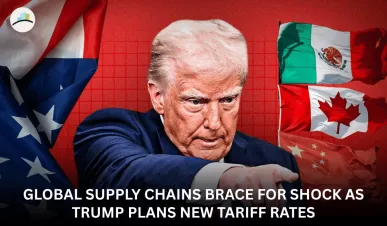
As former President Donald Trump signals he may begin announcing new tariff rates on foreign nations as soon as Friday, investors, policymakers, and corporate strategists are bracing for a geopolitical shockwave that could redefine global trade in the second half of the decade. While headlines are focusing on the possibility of higher levies, the broader implications of Trump’s rhetoric—and its timing—deserve closer scrutiny.
Why Now? The Politics Behind the Announcement
Trump’s suggestion of imminent tariff declarations comes amid a crucial phase in the 2026 midterm campaign cycle and mounting domestic political polarization. His potential return to the White House in 2025 has already rattled allies and rivals alike, but this move appears to serve dual purposes: signaling to his base a commitment to “America First” trade orthodoxy while testing the resolve of trading partners ahead of potential negotiations.
Economic historians note parallels to the Smoot-Hawley Tariff Act of 1930, which exacerbated the Great Depression. While the context is different today, Trump’s “tariff as leverage” doctrine risks triggering retaliatory measures that could choke supply chains just as global trade recovers from years of pandemic-related disruption.
White House to Start Notifying Countries About Tariffs, Trump Says
— Linda Hill (@bulldoghill) July 4, 2025
After striking only a few trade deals since declaring a 90-day pause in April, President Trump said he would announce new duties starting Friday.@nytimes
Undiscussed Risks and Opportunities
What’s being missed in the debate is how such tariffs could collide with emergent trends:
-
Deglobalization Pressure: If Trump follows through, multinational firms might accelerate supply chain diversification, pushing more manufacturing into “friend-shoring” destinations.
-
Emerging Market Volatility: Developing economies reliant on U.S. market access (Vietnam, Mexico) could face capital flight and currency instability.
-
Energy and Food Inflation: Higher tariffs on commodities could stoke inflation, forcing central banks to maintain higher rates for longer, undermining the soft-landing hopes in 2025.
On the other side, there may be opportunities for domestic industries Trump seeks to shield—steel, autos, and semiconductors could see temporary relief, though at a cost to consumers and downstream manufacturers.
The China Question
Beijing looms large. Any escalation in U.S. tariffs would likely invite a calibrated but forceful response from China, potentially reopening trade tensions that have subsided since 2021. A tit-for-tat spiral could split the global economy into rival trading blocs, reminiscent of Cold War-era economic bifurcation.
Market and Business Implications
Financial markets may be underpricing the potential disruption. In 2018-2019, the U.S.-China trade war wiped hundreds of billions off global equities. With global debt now at record highs (the IMF estimates $315 trillion in 2025), even a modest trade shock could ignite financial instability. Corporate boards will need to accelerate contingency planning, including currency hedging, inventory management, and potential shifts in capital expenditure.
More Articles:
Why This Matters
Trump’s tariff posturing isn’t just political theater. It signals a possible reordering of global trade at a fragile moment for the world economy. Businesses, investors, and policymakers should prepare not only for higher costs but also for a more fractured and less predictable trade environment.



