
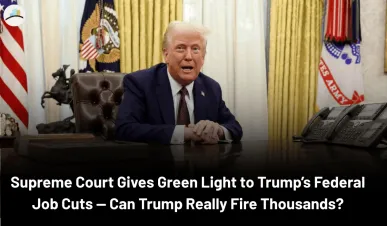
The Supreme Court Just Made a Big Call on Federal Jobs
So, on July 8, the U.S. Supreme Court said it’s okay for the Trump administration to move forward with plans to cut a large number of federal jobs. This doesn’t mean the whole thing is fully approved yet — it’s still being challenged in lower courts — but the justices removed a block that was stopping the layoffs for now. It’s a temporary green light, basically. What’s interesting is that even two of the liberal justices joined the conservatives in this decision, which doesn’t happen all the time. They made it clear this wasn’t about agreeing with the plan, but more about letting it go ahead while the courts sort things out.
The order affects jobs in major federal departments — like Veterans Affairs, IRS, Health and Human Services, State Department, and more. We’re talking about tens of thousands of employees, many of whom are now unsure about what’s next for their careers. One of the main points being argued is whether the President has the right to make these kinds of huge decisions without going through Congress first.
5/ The Court said the mass layoffs can now proceed while lower courts sort out any remaining details.
— Rod D. Martin (@RodDMartin) July 8, 2025
This means Trump can exercise the executive powers YOU gave him.
The bureaucrats claim you have no say over them.
This is the biggest blow to the Deep State in generations. pic.twitter.com/GozcJHsVos
Why This Is a Big Deal — And Not Just for Federal Workers
This isn’t just about jobs being lost — though that’s huge on its own. This whole thing could really change how government works in the U.S. For years, federal jobs have had some level of protection and stability. Now, with this kind of move, there’s a chance that future presidents might try the same thing — using executive orders to reshape whole departments without needing lawmakers’ approval.
There’s also a ripple effect. Fewer workers at agencies like the IRS or the Social Security Administration could mean slower services for regular folks. Think longer waits on tax refunds, delays in Social Security benefits, or weaker public health support. And that’s not even getting into what it means for emergency response teams or environmental protection — a lot of those people are on the list to be cut, too.
Some experts are already saying this could create real risks for how quickly and effectively the government can respond to problems. It’s like pulling people out of a machine while it’s still running — things may still work for a bit, but eventually, something will break.
What Could Happen Next — and Why Some Are Worried
Let’s be real — nobody knows exactly how this is going to turn out. The court case is still ongoing, so it’s possible that a judge could later rule the whole plan illegal. But here’s the tricky part: by then, the layoffs might already be done. People might be gone, offices reshaped, and services already cut. Even if a court says “you shouldn’t have done that,” it may be too late to fix.
Here are a few things that could happen soon:
-
Agencies like the IRS and State Department might start cutting staff this month.
-
Veterans Affairs is reportedly planning to remove 30,000 roles, mostly by not replacing people who retire or leave.
-
Some workers will be shifted to different roles, but many will likely just be let go.
Unions, especially the American Federation of Government Employees (AFGE), are fighting back. They say this puts essential public services in danger. There’s also concern that these job cuts could open the door for more privatization — like hiring outside contractors instead of having full-time government workers.
MORE ARTICLES:
A Look at the Bigger Picture
What’s not being talked about enough is the long-term effect this could have. If fewer people are working in federal jobs, that might seem more “efficient” in the short term, but it also means less stability and less public accountability. A lot of the knowledge in government comes from people who’ve been in their jobs for years — and once they’re gone, you can’t just plug in a replacement and expect the same results.
Also, there’s a risk that this decision could be used by future presidents — from either party — to make huge cuts or changes without needing approval from Congress. That’s a major shift in power. The rules that usually help balance the branches of government could end up weakened, and that’s not a small thing.
Economically, some of the workers who lose their jobs will move to the private sector, which could actually benefit companies who need their skills. But for taxpayers, it could mean paying more money to outside vendors or dealing with slower services — which defeats the whole point of “saving costs.”
Final Thought
This isn’t just about politics. It’s about how we expect our government to work and who gets to make the big decisions. The Supreme Court didn’t say this plan is right or wrong — just that it can move ahead for now. But with thousands of jobs at stake and big departments like Veterans Affairs and IRS already starting to act, the effects will be real and fast.
If this approach continues, it might change not just the size of the government, but the way it serves people. And that’s something worth paying close attention to — no matter which side of the political fence you’re on.



