
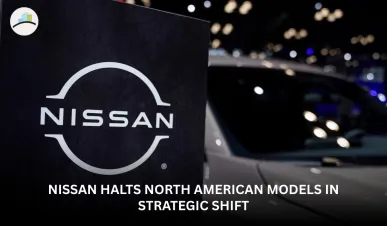
Nissan’s decision to halt production of three models across its U.S. and Canadian plants may look like a routine cost-cutting move on the surface. But dig deeper, and it becomes a case study in how automakers are rapidly rethinking their product portfolios, manufacturing footprints, and regional strategies amid a fast-evolving global auto market.
According to reports from Nikkei, production of the Altima, Leaf, and Rogue Sport will be discontinued at facilities in Mississippi, Tennessee, and Ontario. While this doesn’t mean the end of these models globally, their withdrawal from North American lines reflects broader pressures facing legacy automakers: changing consumer demand, EV cannibalization, and unsustainable manufacturing complexity.
🚗💨 Big news in the auto industry! Nissan halts three Canada-bound models at two US plants. What do you think this means for the future of manufacturing and the market? 🤔 Dive into the details and share your thoughts! 👉 https://t.co/c0qjs0HIt7 #Nissan #AutoIndustry #Manufact… pic.twitter.com/vNSGHF8g43
— Yogi Liman (@yogiliman) July 9, 2025
Why This Happened: A Collision of Forces
Nissan’s move is rooted in a blend of economics, consumer trends, and geopolitical currents:
-
Sedans are out, crossovers are in. U.S. consumers continue to abandon sedans like the Altima in favor of SUVs and trucks. Even efficient compact SUVs like the Rogue Sport are being squeezed by the rise of hybrid and full-size electric options.
-
The EV pivot is accelerating. The Leaf, once a pioneer in the EV space, now looks outdated in a market dominated by Tesla, Hyundai, and emerging Chinese players. Nissan’s investment is shifting toward next-generation EV platforms co-developed with Renault and Mitsubishi.
-
Factories are overloaded. Nissan operates multiple plants across North America, and rationalizing production helps reduce fixed costs, especially as global margins shrink under price pressure from EV competition.
What’s Not Being Discussed Enough
1. North American Manufacturing Is Entering a Shakeout Phase
This isn’t just about Nissan. Similar announcements from Ford and Stellantis suggest that legacy carmakers are pruning their portfolios to focus on fewer, more competitive models. Plants that once built dozens of trims will now prioritize EV production or be idled.
2. The EV Transition Isn't Just About Adding—It's About Subtracting
Automakers aren’t simply adding EVs to their lineups—they’re replacing underperforming or outdated internal combustion models. That process involves hard decisions, job risks, and market realignment. The Leaf's discontinuation is symbolic: the first wave of EVs is being eclipsed by faster, cheaper, better tech.
3. Canada’s Role May Shrink Without Battery Investment
With Ontario losing a production line, Canada risks becoming a peripheral player in the EV era unless it aggressively attracts battery cell manufacturing or EV component investment. Missing the EV supply chain shift could turn key plants obsolete within the decade.
MORE ARTICLES:
Hidden Risks and Opportunities
Risk: Workforce Displacement
Thousands of jobs could be impacted across the three plants. Without retraining programs aligned with EV production, workers may struggle to transition as factories retool or shut down.
Risk: Dealer Disruption
Nissan dealers already grappling with supply volatility now face the challenge of selling discontinued models—or explaining the gap until replacements arrive. This could hit brand loyalty and short-term sales.
Opportunity: Platform Consolidation
This move allows Nissan to streamline production around its new CMF-EV platform, designed for global efficiency. Fewer models can mean better margins and faster time to market.
Opportunity: Reinvention of the Brand
Nissan has struggled to define its post-Ghosn identity. A clean break from aging models and an aggressive EV roadmap could help reposition the brand as a modern, tech-forward competitor.
Historical Parallel: When Ford Killed the Taurus
The U.S. sedan market saw a similar inflection point in the early 2000s, when Ford discontinued the Taurus after years of declining demand. Though it was once America’s best-selling car, consumer tastes had shifted. Nissan’s Altima may be the modern-day Taurus—a once-dominant model overtaken by broader market trends.
Why It Matters
This isn’t just a production pause—it’s a signal of the end of an era in auto manufacturing. As EV disruption hits its second phase, automakers are shedding legacy weight. Nissan’s move is a wake-up call for governments, workers, and investors: the EV transition demands more than new models. It requires a fundamental restructuring of what—and where—we build.



