
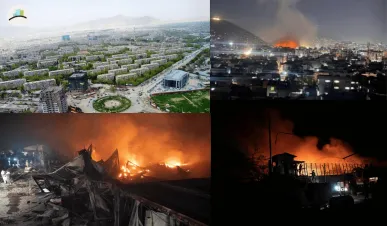
On the night of March 16, 2026, a Pakistani airstrike struck the Omid Addiction Treatment Hospital in Kabul, Afghanistan’s capital, resulting in catastrophic civilian losses and a dramatic escalation in the ongoing Pakistan‑Afghanistan conflict. Afghan officials reported that the attack killed around 400 people and injured roughly 250, many of whom were patients receiving rehabilitation treatment and civilians caught in the blast.
Afghanistan accused Pakistan of launching an airstrike that killed at least 400 people at a drug treatment hospital, in what could mark a major escalation in fighting between the neighbors https://t.co/ek9pRGVeDt
— Bloomberg (@business) March 17, 2026
The rehabilitation center, which served as a 2,000‑bed facility, was devastated by the strike around 9 p.m. local time. Rescue teams combed through the rubble, with video footage showing large plumes of smoke and flames rising from the site and bodies being pulled from debris well into Tuesday morning.
Afghan authorities have blamed the Pakistani military for the attack, alleging it violated Afghanistan’s sovereignty and targeted a civilian institution. Pakistan, however, has strongly denied responsibility for striking the hospital, stating that its operations were aimed at alleged militant infrastructure and not civilian facilities.
Conflicting Claims and Denials
The Taliban-led Afghan government has firmly labeled the strike a crime against humanity and called for global accountability. Taliban spokesman Zabihullah Mujahid stated that the attack was unjustifiable, arguing that the hospital was a civilian facility and not a military site. International human rights groups also condemned the high civilian casualties and urged an independent investigation.
Pakistan’s government has rejected accusations of striking the hospital, insisting that its air campaign—conducted under an operation it claims targets militant bases and support networks—is intended solely to curb insurgent groups operating near and within Afghanistan’s borders. Islamabad has attempted to dismiss claims of hitting civilian infrastructure as false and misleading.
Other News
-Israel Strikes Ali Larijani: What You Need to Know About the Escalating Israel-Iran Conflict
-Meningitis B Outbreak: What Is Meningitis B, Symptoms, and Who Is Most at Risk
Regional Reactions and Condemnations
India strongly condemned the attack as “barbaric” and a “cowardly, unconscionable act of violence,” especially because it occurred during Ramadan, a sacred time for Muslims. India’s Ministry of External Affairs called on the international community to hold those responsible accountable and insisted that striking a hospital cannot be justified under any circumstances.
Across Afghanistan and beyond, officials, athletes, and public figures expressed grief and outrage. Afghan cricketers and civil society leaders described the attack as a brutal blow to innocent families, while international observers warned that the incident could further destabilize an already tense region.
Escalation of Conflict and Broader Implications
The Kabul hospital strike is the deadliest known incident in the recent Pakistan‑Afghanistan conflict, which has seen renewed clashes, border exchanges, and air raids over the past three weeks. Both countries have accused one another of harboring militants and supporting insurgent groups that launch attacks across the rugged frontier that separates them.
Afghan officials have rejected Pakistan’s claims about militant safe havens, instead accusing Islamabad of repeatedly violating Afghan airspace and attacking civilian targets with disproportionate force. Pakistan maintains that its operations are focused on dismantling terrorist support infrastructure and stems from what it says are repeated militant attacks originating from Afghan territory.
Human Toll and Humanitarian Concerns
Beyond official claims and counterclaims, the human cost of the strike has been devastating. Families searching for loved ones at the wrecked hospital spoke of scenes of horror and heartbreak. With patients, medical personnel, and visitors among the casualties, the attack has sparked fresh calls for international intervention to protect civilians in conflict zones and to ensure compliance with humanitarian law.
What Comes Next?
As both sides trade blame, diplomatic efforts led by regional powers, including China, have so far failed to halt the violence. The hospital strike threatens to derail tentative ceasefire efforts and could provoke further retaliatory actions, deepening mistrust between Kabul and Islamabad. Observers warn that without renewed dialogue or international pressure to de-escalate, the conflict could spiral into even broader instability, affecting South Asia’s security environment.



