
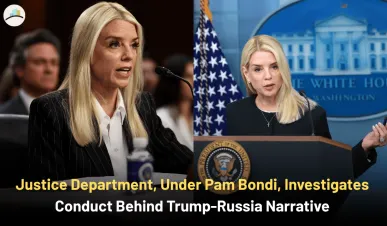
Justice Department Moves Ahead with Grand Jury in Trump-Russia Probe
The U.S. Department of Justice has opened a grand jury investigation to examine whether high-ranking intelligence officials played a role in promoting a false narrative that linked former President Donald Trump to Russian election interference. Attorney General Pam Bondi approved the legal proceedings following a referral from the Office of the Director of National Intelligence. The grand jury process is now active, with subpoenas expected to follow.
🚨🚨 Pam Bondi has initiated a formal grand jury probe of the Russiagate origins…not into collusion by Trump or associates, but rather into whether Obama-era officials knowingly promoted a false narrative.
— Myrna 𝕏 (@GigaBeers) August 4, 2025
Made my day!!pic.twitter.com/5dETTEwWYO
The Broader Relevance of This Investigation
This development goes far beyond just revisiting old headlines. It reopens one of the most politically charged stories in recent American history and may reshape how the public understands it.
-
The investigation signals that the DOJ sees potential legal grounds in claims that certain officials may have misrepresented or politicized intelligence.
-
It raises deeper concerns about accountability inside agencies responsible for national security and election oversight.
-
This is a rare instance where the Justice Department is scrutinizing actions taken during a previous administration, adding layers of political and institutional tension.
What began years ago as a national security investigation could now transform into a courtroom drama with lasting consequences.
MORE ARTICLES:
- Kentucky’s $9 Billion Whiskey Market Faces Economic Pressures and Legal Trouble
- Tesla Approves $30 Billion Pay Package to Keep Elon Musk Amid Legal Fight
- Tropical Storm Dexter Forms and Moves Away From U.S. Coast
Overlooked Issues Beneath the Surface
Beyond the immediate headlines, this grand jury carries long-term implications for how intelligence and justice intersect with politics.
The investigation could redefine how intelligence is used in politically sensitive contexts. If wrongdoing is found, it could lead to stronger safeguards around surveillance and reporting—potentially changing how future election-related investigations are handled.
It also comes at a volatile political moment. With the next presidential election looming, the case could fuel broader narratives about bias, institutional power, and the weaponization of government. This dynamic could polarize public opinion even more than the original probe did.
And historically, few grand jury actions have tried to legally challenge prior high-level decisions within the national security establishment. That makes this effort both bold and unprecedented.
Legal and Political Consequences Going Forward
The outcome of this case could ripple across multiple levels—legal, institutional, and social.
If the investigation leads to indictments, it would be a landmark moment. Former officials could face charges tied to how intelligence was gathered, interpreted, or communicated. Even without charges, the process itself could lead to calls for reform across agencies.
From a policy standpoint, this grand jury might influence future oversight measures and how agencies interact with political leadership during election seasons.
Public trust is also on the line. If the grand jury uncovers manipulation or misconduct, it could deepen skepticism toward U.S. intelligence institutions. On the other hand, a lack of findings might be seen by some as a political maneuver with no real weight.
Conclusion
The grand jury investigation into the origins of the Trump-Russia narrative signals a dramatic new chapter in an already complex saga. It challenges past assumptions, raises the stakes for government accountability, and has the potential to reshape how justice and intelligence intersect in the U.S.
What’s next: Watch for who is subpoenaed, how the courts respond to the legal arguments, and how political leaders on both sides react. This story is far from over—and its outcome could echo for years.



