
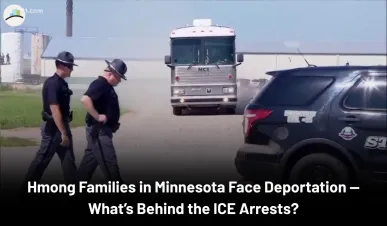
Dozens of Hmong Minnesotans Face Deportation — And It’s Raising Some Serious Questions
Something is happening in Minnesota that’s really shaken up a lot of people, especially in the Hmong community. In the past few weeks, more than 20 Hmong men — most of them long-time residents, husbands, fathers, even business owners — have been arrested by immigration officials. Many of them are now facing deportation to Laos, a country they haven’t seen in decades, and for some, a place they’ve never even lived in.
What’s frustrating to many is that this isn’t just about paperwork or immigration violations. It’s about history, about promises made, and maybe now, being broken.
Hmong Minnesotans face deportation to Laos after ICE arrests https://t.co/BkVJ9i3TSD
— The Minnesota Star Tribune (@StarTribune) July 3, 2025
Why Now? What Changed?
So here’s what’s behind all this. The U.S. and Laos recently agreed on new terms to allow deportations — something Laos hadn’t really accepted for years. That agreement has quietly opened the door for ICE to go after people with old removal orders. And that includes many Hmong individuals who came here as refugees after the Vietnam War.
The thing is, some of these deportation cases are tied to minor crimes committed 20 or even 30 years ago. These aren’t people with recent records. They’ve lived in the U.S. for decades, built lives, paid taxes, raised families. So now people are asking — how fair is it to drag those charges back up now and say they have to leave?
What Everyone’s Feeling — But No One’s Really Saying
There’s a lot of stress and fear in the community right now. People feel like they’re being punished twice — once for mistakes they made long ago, and now again for simply trying to move on. Some of these men have U.S. citizen kids, own homes, and have no ties to Laos anymore. They don’t even speak the language.
And that’s part of the deeper issue. For many Hmong families, being sent back to Laos isn’t just about leaving the U.S. It’s being sent to a place that’s never felt safe. Some families fled violence, persecution, or war decades ago. For them, deportation isn’t just deportation — it’s returning to danger.
More Articles:
What This Means for Minnesota and Beyond
There’s also a real impact here in Minnesota. The Hmong community is a big part of the state’s culture and economy. They run businesses, work in schools and clinics, and help keep neighborhoods strong. Taking people out of those roles — especially without warning — can hurt a lot more than just their families.
It also puts pressure on local organizations. Lawyers, nonprofits, and community leaders are now scrambling to help families who are scared or don’t know what to do next. Some are holding legal workshops, others are helping with translation and paperwork. But the truth is, this could all have been avoided with clearer policy and more communication.
The Bigger Picture — And Some Tough Questions
This isn’t the first time something like this has happened. Other refugee groups — like Iraqis, Cambodians, even Vietnamese — have faced deportation threats after years of living here. But the Hmong story feels especially painful because of the history involved. These were U.S. allies during the Vietnam-era conflict in Laos. They risked their lives to help American forces.
Now, some are asking: if the U.S. made a promise back then, does it still matter today? And if someone served, struggled, and stayed — shouldn’t there be a way to recognize that, even if they made mistakes in the past?
It’s not an easy answer. But it’s one we can’t avoid anymore.
What Could Happen Next?
Right now, a few things are in motion:
-
Minnesota’s congressional leaders are pushing for ICE to pause these deportations.
-
Local legal teams are preparing to fight the cases in court.
-
Activists and nonprofit groups are calling for policy changes — or at least temporary protection for those most at risk.
But time is tight. And for many families, the fear is already real. Even if someone isn’t deported tomorrow, just knowing it could happen has already changed how safe they feel in their own homes.
Final Thought
What’s happening in Minnesota is about more than just law enforcement. It’s about loyalty, history, and how we treat people who’ve been here for decades, helped build this country, and trusted that they had a place in it.
The U.S. has always said it stands by its allies. Right now, the Hmong community is wondering if that still holds true.



