
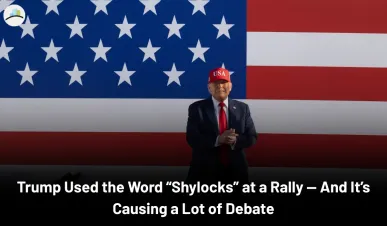
At a rally held in Iowa just ahead of Independence Day, former U.S. President Donald Trump used a word that’s now being talked about a lot — “Shylocks.” He said it while talking about unfair bankers and people who take advantage of others financially. But here’s the thing: that word has a really bad history, especially among Jewish communities. It’s not just an old term — it’s one that has often been used in an antisemitic way, going all the way back to Shakespeare’s time.
Trump calls some bankers “shylocks”.
— FreeThinkerFitness (@FreeThinkerFit) July 4, 2025
Shylocks were greedy Jewish moneylenders, villains in Shakespeare’s The Merchant of Venice. pic.twitter.com/XBnVgcDCgn
What Happened at the Rally
So basically, Trump was talking about repealing estate and death taxes — something he's been pushing for as part of his comeback narrative. He said that some bankers are good people, but others are “Shylocks.” It might sound like just an outdated word to some, but for many people, especially in Jewish circles, it’s really offensive. It’s a word that’s been used to stereotype Jews as greedy or dishonest, and that’s why it’s so hurtful.
Trump later said he didn’t know the word was considered antisemitic. He claimed he was just talking about greedy loan sharks. But even then, people are saying — well, shouldn’t someone who’s been president know better by now?
Why People Are Upset
It’s not just about using one bad word. The bigger issue is how often this kind of language comes up when Trump speaks. This isn’t the first time he’s said something that Jewish leaders or civil rights groups have had to call out. It raises questions like: Is he doing it on purpose to fire up his base? Or does he just not care enough to watch his words?
And honestly, when someone as powerful as a former president talks like this, it matters. Words from leaders shape public thinking. When you use a loaded word in a speech that’s supposed to be about tax policy, it sends a weird message — and maybe even a dangerous one.
Is There Something Bigger Going On?
Some people think this might be part of a bigger plan. Trump has always tried to present himself as the outsider, the guy fighting against elites. Talking about “Shylocks” might just be another way to paint a picture of the rich and powerful as villains — especially bankers or people involved with money.
But when that language is tied to religion or ethnicity, it’s not just politics anymore. It becomes something darker. Some experts have pointed out that leaders in history have done similar things — using certain communities as easy targets to blame for bigger problems.
So even if Trump didn’t mean to be antisemitic (and we don’t know for sure), the effect is still there. And it’s not something we should just brush off.
More Articles:
What Could Happen Next?
There are a few things people are watching for now:
-
Trump is expected to meet Israeli Prime Minister Netanyahu soon. This comment might make that meeting a bit more awkward.
-
Jewish voter groups are divided. Some still support Trump for his policies toward Israel, but others feel more alienated after comments like this.
-
Inside the Republican party, some leaders may try to ignore the controversy, but it could still hurt their ability to connect with more moderate or diverse voters.
And from a business point of view, there’s some unease too. Investors don’t usually react much to campaign speeches, but when things get too unpredictable — especially with language like this — it adds uncertainty. And markets really don’t like uncertainty.
Final Thoughts
Honestly, this whole thing feels like more than just a slip of the tongue. It brings up real questions about how politicians talk about money, power, and the people they blame for what’s wrong. Trump has always used bold, controversial language — but when that starts touching on old stereotypes, it can open doors that are better left closed.
So yeah, it’s just one word — but it’s also a warning sign. Because if leaders keep crossing lines and people stop calling it out, then those lines start to disappear. And that’s when things can get dangerous — not just for politics, but for how we treat each other.



