
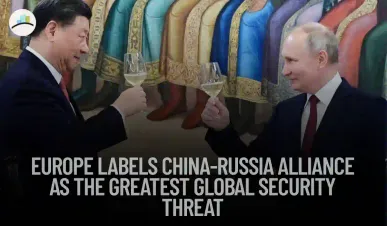
European policymakers and security analysts have identified the deepening strategic alliance between China and Russia as the most significant global security threat today. The partnership’s growing military cooperation, economic interdependence, and shared geopolitical ambitions pose a direct challenge to European stability and the established international order.
This shift comes amid mounting concerns that Beijing’s support enables Moscow to circumvent Western sanctions, particularly in the context of Russia’s ongoing conflict in Ukraine. The European Union has responded with targeted sanctions against Chinese entities providing dual-use technology and military assistance to Russia, but experts warn that the alliance continues to grow stronger.
Military and Economic Dimensions Undermine European Security
The China-Russia partnership has evolved into a complex strategic relationship with substantial implications for European security. China has emerged as a critical supplier of dual-use goods — microelectronics, machine tools, and advanced components — that bolster Russia’s military-industrial capabilities. These supplies have allowed Russia to mitigate the impact of Western sanctions and maintain its defense production amid global restrictions.
Economically, China’s financial and trade support provides Moscow with a vital lifeline. As Russia faces increasing economic isolation, China’s growing imports of Russian energy and commodities sustain its economy. This economic interdependence complicates Europe’s attempts to pressure Russia into de-escalating the conflict, while also exposing Europe to vulnerabilities related to overreliance on Chinese markets and supply chains.
Geopolitical Implications: A New Challenge to the International Order
Beyond economics and military support, the China-Russia alliance signals a broader geopolitical realignment. Both countries promote an alternative global governance model aimed at reducing Western influence. China’s vision of a multipolar world, combined with Russia’s efforts to erode NATO’s cohesion and Western unity, underscore a shared objective to challenge existing power structures.
European officials fear this emerging axis could destabilize global security architecture and embolden authoritarian regimes worldwide. This has heightened urgency for the European Union and NATO to reassess strategic priorities and defense postures.
Also Read :
Fed’s Daly Sees April Inflation Drop as Relief, Not Victory
Markets Rally After Huge Court Win, Nvidia’s Record Earnings
Europe’s Strategic Response: From Sanctions to Defense Reinforcement
Europe has sought to counter the alliance through a mix of economic sanctions and diplomatic pressure. The EU’s sanctions target Chinese companies assisting Russia’s military efforts, yet enforcement remains challenging due to the sophisticated supply chains involved.
Military analysts and policymakers emphasize the need for a more assertive approach. This includes boosting European defense budgets, accelerating technological innovation in defense industries, and deepening transatlantic cooperation with the United States and NATO allies.
European leaders also highlight the importance of diversifying economic partnerships to reduce dependency on Chinese supply chains, which have proven vulnerable amid escalating geopolitical tensions.
What Lies Ahead: Possible Scenarios for Europe and Global Security
Looking ahead, several potential developments could shape Europe’s security landscape:
-
Escalation of Military Conflict: The alliance’s strengthened military ties might lead to more aggressive posturing near NATO borders or proxy conflicts.
-
Economic Decoupling: Europe could accelerate efforts to decouple its economy from China and Russia, leading to a reconfiguration of global trade networks.
-
Diplomatic Realignment: Some European countries may pursue new alliances or revise their defense strategies to navigate the evolving threat environment.
These scenarios emphasize the need for coordinated policy and strategic foresight to safeguard European and global stability.
Source: Bloomberg



