
China’s Trade Bump: A Temporary Relief or Strategic Signal?
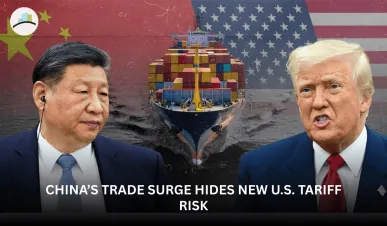
China’s exports and imports rose more than expected in June, just as the U.S. revisits tariffs under former President Trump’s looming review deadline. While this uptick offers a glimmer of hope for the world’s second-largest economy, the story beneath the surface is far more complex—and potentially volatile.
BREAKING: China’s exports up 5.8% in June beating expectations… some would have you believe US tariffs would cause the collapse of the Chinese economy. Truth is China is no longer dependent on the US market like it once was, China has found new markets. pic.twitter.com/NByMHzgwMe
— Barrett (@BarrettYouTube) July 14, 2025
Why the Sudden Rebound?
Several short-term factors fueled this trade bounce:
-
Front-loading ahead of tariffs: With the Trump-era tariff review deadline approaching, exporters may be rushing shipments to beat any possible reimposed duties.
-
Weak yuan advantage: The Chinese yuan’s depreciation is making Chinese goods cheaper and more attractive globally.
-
Low base effect: Trade numbers from mid-2024 were soft, making even a modest increase in 2025 appear more dramatic.
But this spike may not be the sign of a long-term recovery. It could instead be the calm before a geopolitical storm.
What’s Not Being Discussed Enough?
-
Tariff risk as political leverage
Trump’s potential return to office and his aggressive stance on China could bring back broad tariffs, hitting electronics, EVs, and AI-related hardware. The U.S. election cycle is not just domestic—it’s already reshaping global trade flows. -
China’s dependence on cyclical sectors
The export gains come largely from electronics and auto parts, sectors heavily tied to boom-bust cycles and foreign demand. This raises questions about sustainability. -
Structural slowdown remains
Despite the short-term export gain, China is still grappling with deflationary pressures, a collapsing property sector, and weakening domestic consumption. The trade numbers may serve as a smokescreen, temporarily covering deeper issues.
MORE ARTICLES:
Hidden Risks and Economic Implications
-
Supply chain decoupling continues, with Western companies diversifying away from China—quietly but steadily. This could weaken China’s long-term trade resilience.
-
Emerging economies may suffer if global demand reroutes back to China temporarily, taking attention away from countries like Vietnam, India, and Mexico that have been absorbing China’s lost trade share.
-
Global inflation could see renewed pressure if tariffs return or if China retaliates with its own measures, especially in high-demand categories like EV batteries and rare earth materials.
Historical Parallels
In 2018–2019, a similar trade spike occurred just before U.S. tariffs hit. The result? A global manufacturing slowdown and a significant chill in U.S.–China relations. The current situation is eerily familiar, but with added complexity—AI trade wars, energy shifts, and digital currency tensions.
What Should Businesses and Investors Watch?
-
Upcoming U.S. tariff decisions – particularly those targeting clean tech and semiconductors.
-
Chinese policy signals – Beijing may roll out more incentives to stabilize exports, even if it sacrifices local growth or environmental goals.
-
ASEAN trade redirection – Keep an eye on rerouted shipping and investment flows; China’s temporary gain may lead to strategic losses elsewhere.
Why This Is Important
This isn’t just a trade story—it’s a proxy war for economic dominance between two superpowers. The export bump may soothe headlines, but deeper trends suggest a high-stakes recalibration of global trade, policy, and power.



