
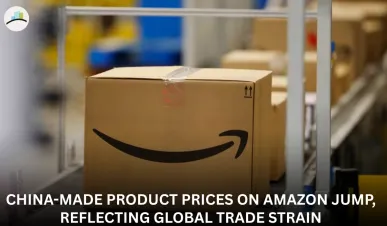
If you've been shopping on Amazon lately and noticed that everyday items like phone chargers, pet supplies, or air fryers seem a bit pricier—you're not imagining it.
Prices for Chinese-made goods sold on Amazon in the U.S. have surged nearly 35% since 2021, far outpacing overall inflation. That’s not just sticker shock. It’s a symptom of something bigger—an unraveling of the decades-old formula that delivered low-cost products to American doorsteps with astonishing speed and efficiency.
And it might just be the beginning.
What’s Really Behind the Price Spike?
You could blame inflation. But this isn’t just about post-pandemic price increases or supply chain hangovers. The reason these prices are climbing so fast lies in a complex web of politics, policy, and business strategy that has been building for years.
US prices for China-made goods on Amazon rise faster than inflation, analysis shows, as tariffs bitehttps://t.co/z5LuwbYZp1
— Clearwater Management Korea (@ClearwaterKorea) June 30, 2025
Let’s unpack what’s happening behind the scenes:
1. Tariffs and Tensions Are Biting Back
The U.S.-China trade war didn’t end when Trump left office. If anything, the Biden administration has doubled down on tariffs, especially on sectors like green energy, semiconductors, and EVs. Even goods that aren’t directly hit are feeling the ripple effects in logistics, sourcing, and compliance costs.
2. It’s Getting Pricier to Make Stuff in China
China’s factories aren’t the bargain machines they once were. Wages are rising, energy costs are up, and Beijing is nudging industries to move away from low-end manufacturing to higher-tech output. That means things like toasters, toys, and toolkits are getting more expensive to produce.
3. Sellers Are Paying More to Stay Visible
If you're a seller on Amazon, especially from China, you're now dealing with higher platform fees, stricter rules, warehousing costs, and more competition. Those sellers are passing those costs along to—you guessed it—consumers.
4. The Great Supply Chain Shuffle
Retailers are trying to diversify away from China—a strategy known as “friendshoring.” But building a supply chain in Vietnam or Mexico doesn’t happen overnight. And in the short term, running parallel supply chains is expensive.
Why This Change Is Bigger Than Amazon
This isn’t just a blip on the Amazon price chart. It marks a shift in how—and where—America gets its goods. For decades, China's low-cost manufacturing held down prices across retail. That anchor is slipping.
The End of Cheap China?
For many consumers, the era of rock-bottom prices may be ending. What used to be an easy impulse buy is now a considered purchase. Retailers like Amazon may soon have to rethink their value propositions as Chinese sellers raise prices and competitors from other countries struggle to catch up in scale and efficiency.
Ripple Effects for Small Sellers
If you run a small online business that buys from Chinese suppliers, you're feeling the squeeze. Margins are shrinking, and passing on costs to price-sensitive customers can be risky. Many are caught between rising input costs and flat demand.
A New Layer of Inflation
Economists often look at inflation through big buckets like housing and energy. But this trend reveals how inflation is now creeping through the digital aisles of e-commerce platforms, in a slower, subtler way that traditional metrics may miss.
What’s Not Being Talked About Enough?
-
Consumer fatigue is setting in. The "Amazon effect"—where you could get almost anything fast and cheap—is slowly breaking. Consumers are starting to notice. And they’re not thrilled.
-
Geopolitical risk is now personal. These rising prices are a direct, daily impact of global tensions. For many, this is the first time international policy has shown up in their cart total.
-
Longer-term, there’s opportunity. As supply chains shift, countries like India, Vietnam, and Mexico stand to benefit. So do American manufacturing hubs—if they can scale fast enough.
More Artices:
A Bit of Déjà Vu?
The last time we saw a price disruption this impactful was in the 1970s oil crisis. That was about gas. This is about goods. But the pattern is similar: dependency on one dominant player (then OPEC, now China), followed by a rude awakening when conditions change.
This shift won't reverse overnight. And as prices rise, we’ll be forced to rethink what we buy, how often we buy it, and where it comes from.
In Short:
Next time you're shocked by the price of a gadget that used to be cheap, remember—it’s not just inflation. It’s the global economy, reshuffling beneath your fingertips.



