
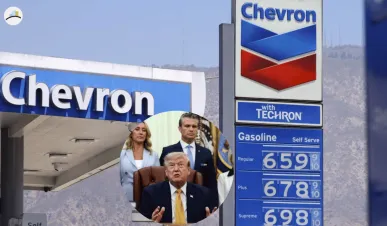
President Donald Trump publicly criticized Chevron and ExxonMobil, saying the companies earned substantial profits during a period when fuel prices remained high for American families. He argued that energy producers should do more to help consumers instead of benefiting from elevated oil prices caused by international tensions.
President Trump publicly turned on ExxonMobil and Chevron, demanding they 'give back' record profits to consumers as gas prices average $4.10 a gallon nationwide, up over 30% since the Iran war started https://t.co/HsVh5PmX9y pic.twitter.com/l5nN4n43Cl
— Reuters (@Reuters) August 4, 2026
The remarks marked a notable shift in tone, as Trump has long supported increased domestic oil production. However, with fuel costs remaining a key concern for voters, he emphasized that Americans should see relief at the pump rather than rising expenses.
Why Chevron Reported Strong Earnings
Chevron's latest financial results reflected the benefits of higher crude oil prices and solid operational performance. The company continued to generate strong revenue from its upstream production business while its refining operations also contributed positively.
Global oil prices climbed during the quarter as geopolitical instability in the Middle East created concerns about energy supplies. The uncertainty surrounding shipping routes and global production helped push crude prices higher, allowing major oil producers to benefit from improved market conditions.
Chevron also maintained disciplined spending, continued investing in production projects, and returned significant value to shareholders through dividends and share repurchase programs.
Rising Fuel Prices Continue to Affect Americans
Although crude oil prices have fluctuated in recent months, many drivers across the United States are still paying more for gasoline than they were earlier in the year.
Higher transportation costs have placed additional pressure on household budgets, particularly for families that rely heavily on personal vehicles for work and daily commuting. Businesses have also faced increased operating expenses as fuel costs remain elevated.
Consumers often associate rising gasoline prices with oil company profits, making the issue politically sensitive whenever major producers report strong financial results.
MORE ARTICLES:
Trump Urges Oil Companies to Help Consumers
Trump said energy companies should use part of their financial success to benefit American consumers by supporting lower fuel prices whenever market conditions allow.
He stressed that while strong businesses contribute to economic growth, companies should also recognize the financial challenges many households continue to face. His comments reflect growing political attention on energy affordability as inflation and living costs remain important issues for voters.
Chevron's Position in the Global Energy Industry
Chevron remains one of the world's largest integrated energy companies, operating across oil exploration, production, refining, chemicals, and fuel marketing.
Its diversified business model allows the company to generate revenue from multiple segments of the energy industry, helping it remain financially stable even during periods of market volatility. Chevron has also continued investing in technology, operational efficiency, and long-term energy projects to strengthen future production.
The company is widely recognized for maintaining a strong balance sheet and consistently returning value to shareholders.
Why Oil Companies Defend Their Profits
Energy companies argue that their earnings are influenced by global market conditions rather than direct control over gasoline prices. Crude oil costs, refining capacity, transportation expenses, taxes, seasonal demand, and international supply disruptions all contribute to the final price consumers pay at fuel stations.
Industry experts also note that periods of higher profits often follow years of weaker earnings during downturns in oil markets, making profitability cyclical rather than constant.
Political Debate Over Energy Prices
Fuel prices have long been one of the most closely watched economic indicators in the United States because they directly affect millions of households.
As elections approach, energy costs are expected to remain a major political issue. Lawmakers from both parties continue debating how to balance domestic energy production, consumer affordability, environmental goals, and corporate profitability.
Trump's criticism of Chevron highlights the growing pressure on major oil companies whenever profits rise during periods of higher living costs.
What Lies Ahead for Chevron
Chevron's future performance will largely depend on global oil demand, geopolitical developments, production levels, and overall economic conditions. If crude prices remain elevated, the company could continue delivering strong financial results.
At the same time, increasing political scrutiny may place additional pressure on large energy companies to demonstrate how their success benefits consumers as well as investors.
Despite the criticism, Chevron remains a leading player in the global energy sector, with a strong financial position and an important role in supplying energy to markets around the world. As global energy markets continue to evolve, the company's performance and business decisions are likely to remain under close observation by policymakers, investors, and consumers alike.



