
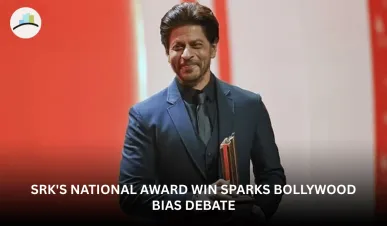
National Film Awards 2025: A Cultural Milestone or Just Another Power Play in Bollywood?
The 71st National Film Awards have once again ignited fierce debate—not just about who won, but why they won. Shah Rukh Khan’s long-awaited recognition with a National Award for Jawan (Best Actor), alongside Rani Mukerji (Mrs. Chatterjee vs Norway) and Vikrant Massey (12th Fail), has been widely celebrated. But beneath the fanfare lies a deeper conversation about how these awards reflect—and shape—the power dynamics of Indian cinema.
I feel it's too late .. #SRK should've received a National Award for Swades. His portrayal of Mohan Bhargav remains his best performance till date.
— Deepak Singh Kushwah (@its_dsk) August 2, 2025
PS: Jawan is nowhere near National Award-worthy.
Better late than never, though.
#ShahRukhKhan𓀠 #NationalAwards pic.twitter.com/cm1cddNtTM
Why this matters: Bollywood’s shifting balance of power
Historically, the National Awards have tried to maintain a neutral tone, often spotlighting regional cinema or indie filmmakers who rarely get mainstream attention. But this year, the scale seems to tilt toward commercial Bollywood.
Shah Rukh Khan’s double win—especially after decades of iconic work—might seem overdue. But the timing is telling. Jawan was more than a box office hit—it was a politically charged, socially layered film wrapped in action. The jury’s choice may be signaling a shift: National Awards are no longer just about cinematic excellence but about cultural relevance and political narrative.
MORE ARTICLES:
What isn’t being discussed enough?
The absence of South Indian blockbusters like Jailer and Leo from the winners’ list has raised eyebrows. Despite their massive commercial and cultural impact, their exclusion hints at a persistent bias against mass-market South Indian cinema, which often outperforms Bollywood in reach and revenues.
Moreover, the recognition of Rani Mukerji's performance in a female-led, issue-based film (Mrs. Chatterjee vs Norway) and Vikrant Massey’s portrayal of social mobility in 12th Fail reflects a growing appetite for socially conscious storytelling. This shift may be subtle but signals the rising influence of OTT-fueled narratives that blend entertainment with commentary.
The Hidden Business Opportunity
These wins are more than trophies—they are brand lifelines. National Awards add long-term value to an actor’s marketability, streaming rights, brand endorsements, and even political influence. For SRK, this recognition could recalibrate his persona—from romantic hero to a voice of cultural authority.
OTT platforms are watching closely. Massey's win, especially, will spike interest in 12th Fail across digital ecosystems, translating into renewed licensing deals and viewership boosts.
Historical parallels: From Bachchan to SRK
The last time a mainstream Bollywood megastar dominated the National Awards was Amitabh Bachchan in the 90s and early 2000s. SRK’s recognition now mirrors that arc—an icon moving from stardom to statesmanship. It opens up the question: Are we seeing the birth of a new kind of political cinema? One where the star is also a symbol?
What’s the risk?
The biggest risk lies in alienating regional and indie filmmakers, who have long looked to the National Awards as their only credible platform of recognition. If Bollywood begins to dominate, we may witness a cultural homogenization that sidelines linguistic and narrative diversity in Indian cinema.
Moreover, the perceived politicization of the awards—awarding films that align with current socio-political narratives—may erode trust in the jury’s neutrality, especially in an election-heavy year like 2025.



