
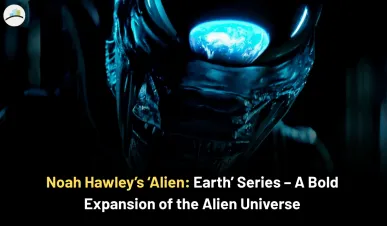
The highly anticipated Alien: Earth series is set to introduce an entirely new chapter in the legendary Alien franchise. Premiering in August 2025, the series brings a fresh perspective to the Alien universe with a new storyline that delves into Earth’s complex future. Created by Noah Hawley, known for his work on Fargo and Legion, Alien: Earth shifts the focus to synthetic beings, exploring the intricacies of identity, corporate control, and the consequences of creating life.
Noah Hawley's daring exploration of the Alien universe makes for a great sci-fi TV show that asks big questions without neglecting the fun factor. https://t.co/P5jI2sejxM
— SPACE.com (@SPACEdotcom) August 5, 2025
What Makes This Series Significant?
Alien: Earth is more than just a prequel—it’s a reinvention of how we look at the Alien universe. Set in 2120, Earth is controlled by a conglomerate of five powerful corporations, each vying for dominance. Prodigy Corp is at the forefront, using human consciousness implanted into synthetic bodies to create hybrid beings. This marks a stark departure from the earlier Alien movies, which mostly focused on survival horror in space. In this new narrative, the horrors are rooted in human manipulation and the existential questions raised by synthetic life.
-
Fresh Take on AI and Humanity: The exploration of hybrid beings opens up discussions on the very nature of consciousness and identity.
-
A New Kind of Horror: Instead of traditional aliens, the terror in Alien: Earth comes from corporate power, environmental degradation, and the struggle for autonomy in a world controlled by corporations.
-
Bigger Questions on Ethics: The show challenges our understanding of ethics in technology, particularly around genetic modification and the use of synthetic beings for corporate gain.
MORE ARTICLES:
What’s Hidden Beneath the Surface?
While much of the buzz around Alien: Earth has focused on its ties to the original Alien films, there are layers of social, political, and technological implications that might not be immediately apparent. The rise of powerful corporations controlling the planet in the series mirrors the increasing corporate influence on real-world politics and economies. This dystopian vision brings to light the dangers of unchecked technological advancement, where profit outweighs ethical considerations.
-
Corporate Control and Social Impact: The series subtly critiques corporate overreach and how it can affect societal structure. Alien: Earth presents a future where private corporations, not governments, dictate the fate of the planet.
-
Political Implications: The introduction of synthetic lifeforms as a workforce or military tool raises questions about the future of labor, technology, and human rights.
-
Historical Parallels: The hybridization of humans and machines also calls back to earlier moments in history when new technologies forced society to reconsider the boundaries of human existence. The show presents a futuristic parallel to past debates over artificial intelligence and cloning.
What Does This Mean for the Future?
As Alien: Earth premieres, it offers a thought-provoking narrative that will resonate beyond its immediate sci-fi thrills. The series touches on deeply relevant issues such as the role of technology in our lives, corporate power, and the future of human rights in a world dominated by synthetic beings. The exploration of synthetic life could spark renewed debates about the ethical implications of emerging technologies like AI and genetic engineering.
-
Shifting the Genre’s Boundaries: By focusing on existential questions rather than just traditional alien threats, Alien: Earth takes the franchise into uncharted territory. The series is poised to redefine what we expect from sci-fi television.
-
Impact on Future TV Shows: This series could open doors for more shows that combine deep philosophical questions with thrilling narratives. It might encourage a new wave of dystopian sci-fi with a stronger focus on societal structures and the consequences of technological progress.
-
Long-term Cultural Relevance: The show is likely to resonate with viewers as it highlights the intersection of technology, power, and ethics—issues that are becoming increasingly urgent in our world today.
Conclusion
Alien: Earth is a bold, forward-thinking expansion of the Alien franchise. While staying true to the franchise’s roots in horror, the show explores deeper questions about humanity, technology, and corporate control. As the series unfolds, it promises not only to provide thrills and excitement but also to provoke important conversations about the future of our world. This new chapter in the Alien saga is something fans and newcomers alike should not miss.
Looking Ahead
As the series progresses, it will be interesting to see how Alien: Earth continues to tackle these complex issues and how the characters evolve. What’s clear is that this show has the potential to be more than just another sci-fi thriller—it could serve as a cultural touchstone for discussions around the future of humanity and technology.



