
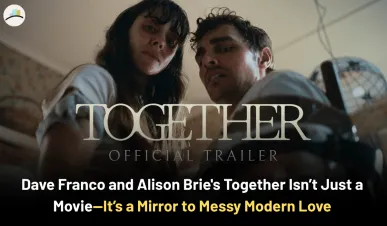
There’s something about Together that gets under your skin. Not in a horror movie way exactly — though yes, there’s some physical discomfort — but more in how it captures the slow unraveling of a relationship you weren’t sure was broken to begin with.
The film, directed by Dave Franco and co-written by his wife Alison Brie, feels oddly personal even if they insist it isn’t based on their own marriage. That’s probably what makes it land harder. It’s two people trapped in a beautiful home, trying to escape each other emotionally while pretending everything is fine. It’s awkward, claustrophobic, and painfully relatable.
And honestly, that’s why it matters right now.
Together (2025) uses the bones of a romantic drama and grafts on body horror. Pretty gross and funny in a way I admired. Trends closer to comedy in its end than I preferred but Dave Franco and Alison Brie sell it regardless. You can tell this was a fun bonding experience for them pic.twitter.com/AitqcCDndJ
— paul (@paulswhtn) July 29, 2025
What This Film Taps Into That Most Don’t
This isn’t just about a couple fighting or falling apart. Together digs into something most movies skip: emotional codependency that doesn’t explode loudly, but rots quietly from the inside.
In a post-lockdown world where many relationships were tested in isolation, this hits a little too close. That feeling of being in love and stuck at the same time — it’s more common than we admit. The movie doesn’t offer solutions, just puts the mess on screen and dares us to sit with it.
What makes it even more interesting is that the film uses physical illness — literal vomiting — to represent emotional overload. It’s graphic, sure, but it’s not there for shock. It’s there because our bodies sometimes react before we find the words. And that part is real.
A Smart Business Move Disguised as Indie Art
From a film industry point of view, Together is clever. One location, two actors, minimal crew — this is indie filmmaking made for streaming.
But here’s the catch: it’s riding the wave of “intimate horror,” where the threat isn’t ghosts or killers, but the people we love. That’s becoming its own profitable niche. Think of movies like Marriage Story or Men — emotional horror sells if you pitch it right.
Also, Franco and Brie are smart to use their off-screen relationship as a marketing hook. It's a double-edged sword, sure, but it grabs attention. And in today’s crowded content landscape, that’s half the battle.
So while it may look like a risky personal project, it’s also a strategic move. Lower budget, strong actors, and built-in curiosity because of the couple behind it. That’s not accidental.
More Articles:
What Critics Aren’t Talking About Enough
One thing missing from most reviews is how Together speaks to millennial and Gen Z relationships.
This generation has grown up with therapy language, attachment styles, and the idea that relationships are things you “work on” constantly. But the film suggests something darker — that over-analysis can become its own trap. That being hyper-aware of your emotions doesn’t always save you from them.
There’s also a quiet commentary on privilege. The couple in the film is wealthy enough to escape to a private villa, yet still miserable. That’s a real tension we’re seeing more of — emotional burnout among the well-off. And no, it doesn’t make the audience feel sympathy, but it does raise the question: if money and comfort aren’t enough, then what is?
What Could Come Next — Or Go Wrong
The film may open the door to more raw, confessional-style thrillers made by couples or close collaborators. But there’s a risk too.
If these stories become a trend, they’ll get commercialized fast. Studios may try to replicate the format without understanding the emotional honesty behind it. You’ll get a wave of fake deep films that mimic the style but not the substance.
On the flip side, Together could push viewers — and creators — to be more honest about what intimacy actually looks like. Not Instagram-filtered love, but real moments of doubt, disgust, and codependency. That could lead to better films. Or more uncomfortable ones. Probably both.
Final Thought
Together isn’t for everyone. It’s slow, it’s awkward, and sometimes it’s just hard to watch. But it’s one of the few films this year that feels emotionally brave. Not perfect, not polished — but brave.
And in a world full of content built for easy watching, maybe that’s enough to make it matter.



