
Will U.S. Companies Really Come Back to Russia? It’s Complicated
After Russia invaded Ukraine in 2022, tons of big foreign companies just packed up and left. We’re talking major U.S. names like Coca-Cola, Nike, Starbucks, ExxonMobil, and Ford — all out of Russia. It was a huge shake-up.
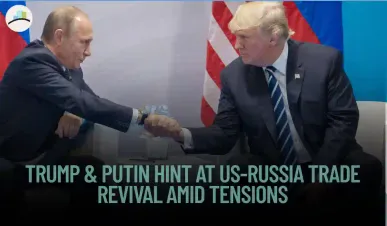
Now, more than three years later, Trump has been throwing out the idea that if there’s some kind of peace deal, U.S.-Russia trade could come back. Putin’s also said that foreign companies might be able to return under certain conditions. Sounds hopeful, right? But honestly, it’s not that simple.
Trump’s Hopeful Talk vs. The Reality on the Ground
Trump said after a phone call with Putin that Russia wants to do big trade with the U.S. once this whole “bloodbath” ends. He thinks Russia has huge potential to create jobs and wealth. But, just a bit later, Trump changed his tone after Russia launched heavy attacks on Kyiv. He called Putin “crazy” and warned about new sanctions.
Putin also warned Western companies to think twice before trying to get their old businesses back in Russia. So, while there’s some talk about reopening business doors, it’s clear the road ahead will be rough.
Why Going Back to Russia is Risky for Companies
The business scene in Russia has totally changed since 2022 — and not in a good way for foreign firms.
Russia now treats countries like the U.S. as “unfriendly states” and has strict rules that can make it nearly impossible for foreign companies to protect their investments. For example, companies can’t freely take their money or equipment out. The government can even take control of companies it thinks are important.
Many companies that left had to sell their assets at rock-bottom prices, or just wrote them off completely. The Russian government has even taken control of some major European companies like Finland’s Fortum and Germany’s Unipro.
So even if there’s a peace deal one day and sanctions get dropped (which honestly feels far off), the damage done is still fresh in everyone’s minds.
Putin’s Message: “We Need to Strangle Big Tech”
At a recent Kremlin event, Putin said Russia needs to choke out big tech companies like Zoom and Microsoft — which had scaled back in Russia after the war started — to give homegrown tech a chance.
He basically said, “They tried to strangle us, so now we’re going to do the same.” That’s a pretty strong signal that foreign companies won’t find it easy to operate in Russia anytime soon.
Not Much Profit to Look Forward To
Economists also say Russia’s economy isn’t looking great outside of military stuff. Investment is drying up in most areas except defense, so growth is expected to be slow or stagnant.
If you’re a U.S. company thinking about coming back, it’s tough to see where the money would be. The military-industrial complex might be the only bright spot — but working with Russia’s military? That’s a no-go for most American firms.
Buyback Deals Might Not Mean Much
Some companies, like Renault and Ford, left Russia with agreements that let them buy back their businesses later if things change. But honestly, nobody knows if those deals will hold up in Russia’s shaky legal environment.
Russian buyers might change the rules, ask for more money, or just ignore the agreements altogether. So companies can’t really count on being able to reclaim their old assets easily.
Also read on Procapitas
What About the Oil and Gas Giants?
Oil and gas companies lost a lot when they left Russia. ExxonMobil, for example, lost a $3.4 billion stake in an oil project. While Russia’s oil industry is huge, big oil firms might not feel like coming back.
Smaller service companies might be more interested since Russia’s oil fields are massive, but they’d have to deal with new rules about local investments and presence.
Some Companies Still Hanging In There
Despite all this, there are still thousands of foreign companies operating in Russia, mostly from countries like China that aren’t aligned with Ukraine.
According to some research groups, about 2,300 foreign firms are still doing business in Russia, around 1,300 are leaving, and nearly 500 have completely left. A few dozen U.S. companies still operate there, but many others have cut back a lot.
Trump reports in his 2hr long call with President Putin, saying it went very well and that Russia wants to do major trade with the United States. Once the bloodshed is done, President Trump said he agrees.
— Charlie Kirk (@charliekirk11) May 19, 2025
Massive progress toward peace. Pray for peace 🙏 pic.twitter.com/FBoNjIxXHT
Sanctions: A Big Roadblock
U.S. sanctions are super strict — companies that break them risk losing access to the U.S. banking system, which is a huge deal.
Even if U.S. sanctions were dropped someday, the European Union still keeps imposing its own sanctions, which would make it tough for companies to juggle business in both Russia and Europe.
So yeah, while Trump and Putin might talk about trade bouncing back, the reality on the ground is way more complicated. With legal risks, shaky business rules, and ongoing tensions, it’s hard to imagine U.S. companies rushing back to Russia anytime soon.



