
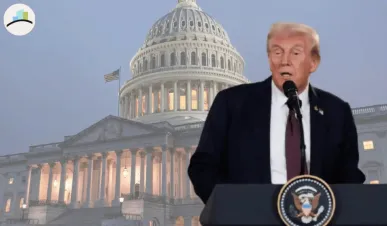
Washington, D.C. — At a time when the U.S. government is partially shut down and millions of Americans are worried about stalled services, former President Donald Trump has made a surprising announcement.
He has proposed a plan that would send health-insurance funds directly to American citizens, bypassing insurance companies entirely.
The idea is as bold as it is controversial — and it’s already sparking heated debate across the nation.
What Trump Said
During a televised address and several online posts, Trump stated that billions of dollars currently going to big insurance corporations under federal healthcare programs could instead go straight into the hands of ordinary Americans.
He argued that this change would give people “the power to choose their own health plans” and reduce what he called “waste and corruption in the insurance industry.”
“Why should Washington send taxpayer money to greedy insurance giants when it can go directly to the American people?” Trump said.
The timing of this proposal — right in the middle of a tense government shutdown — has only added to the political drama.
MORE ARTICLES:
How the Proposed Plan Would Work
Trump’s vision is to redirect existing federal subsidies (currently paid to insurance providers) into direct payments or health credits for eligible citizens.
Here’s what the model could look like based on his outline:
-
Each qualified individual would receive a monthly or annual payment directly from the government.
-
Americans could then choose any private insurer or even a healthcare provider network of their preference.
-
If a person finds a cheaper plan, they could keep the remaining funds.
-
The goal: create competition among insurers and reduce middle-man costs.
However, the exact details, eligibility criteria, and payment structure have not been released yet — leaving economists and policy experts speculating how feasible it really is.
Why This Matters During the Shutdown
The U.S. is in the midst of one of its most tense shutdowns in years. With federal employees unpaid, social programs delayed, and budget talks stalled, the healthcare debate has resurfaced as a major political flashpoint.
Trump’s direct-payment proposal adds fuel to the fire — some see it as a practical fix for broken systems, others as a political distraction.
For many struggling Americans, though, the idea of “cash in hand to pay for your own health insurance” sounds like immediate relief in an uncertain economy.
Supporters vs. Critics
Supporters say:
-
It would make the healthcare system more transparent and efficient.
-
Families could choose coverage that fits their needs instead of being locked into government or corporate plans.
-
It gives people direct control over their health finances.
Critics argue:
-
Direct payments could destabilize existing insurance markets.
-
Low-income citizens might still struggle to afford comprehensive care.
-
The plan could open doors for fraud and misuse without strong oversight.
Healthcare experts warn that while the idea is appealing, implementing it quickly could lead to confusion, delays, and inequality between states.
What It Could Mean for Americans
If passed, this proposal could:
-
Reduce dependency on large insurance corporations.
-
Change how millions of people pay for healthcare.
-
Shift the political narrative ahead of the 2025 budget deal.
But for now, it remains an idea — not a signed policy. Congress would have to approve major changes to federal health funding before anything could take effect.
For everyday Americans, that means the plan is still a distant possibility — though one that’s grabbing attention fast.
What Could Happen Next
-
The Senate and House are expected to reopen talks this week to resolve the shutdown and address healthcare funding.
-
If Trump’s proposal gains traction, it could be folded into a future budget bill or executive action.
-
Analysts say even a pilot version of this plan would reshape federal healthcare for decades.
Until then, the proposal has already done one thing: it’s made healthcare — again — the center of America’s political storm.
Final Take
This latest Trump proposal taps into a deep frustration many Americans feel — that healthcare is too expensive, too complicated, and too controlled by corporations.
Whether this plan ever becomes reality or remains another headline, it highlights a growing debate:
Should government help people by paying companies, or by empowering citizens directly?
For now, one thing is certain — this conversation is far from over.



