
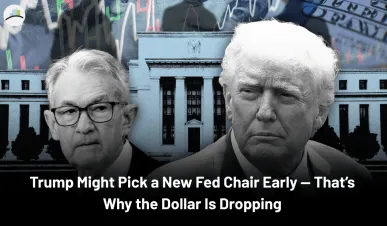
What’s going on?
So here’s the deal — the U.S. dollar is falling. And not just a little. It’s dropped to levels we haven’t seen in a few years. Now, that might sound like just another finance headline, but there’s a reason this matters. A big one.
The buzz is that President Trump might go ahead and name a new Federal Reserve Chair before Jerome Powell’s term is up. That term doesn’t end until 2026, so doing this now — or even just talking about it — is making people nervous. And that nervousness? It’s showing up in the markets.
TRUMP HAS OFFICIALLY BEGUN INTERVIEWING OTHER CANDIDATES FOR FED CHAIR TO REPLACE JEROME POWELL..
— Dividend Dude (@DividendDude_X) June 25, 2025
It is likely that we see a less hawkish Fed Chair which would mean rate cuts more likely and more frequent.
And, that means the stock market is set to rise as interest rates… pic.twitter.com/veJZOZuLfB
Why this move could be a big deal
It’s not just about changing one person. What really has people on edge is what this says about how much control the White House wants over the Fed. The Federal Reserve is supposed to be independent. That’s been the rule for a long time. The idea is simple: you don’t want politics messing with interest rates.
But if Trump decides to push someone out early — or even hints at it — the message it sends is: “We want a central bank that does what the president wants.” That’s where investors start pulling back. They start worrying that future rate decisions might be made for political reasons, not economic ones.
This isn't just theory either. If the Fed looks like it’s being influenced too much, other countries and investors could stop trusting it. That could affect how much faith people have in the U.S. economy overall.
What people aren’t talking about enough
Honestly, there’s a lot of noise around the dollar’s fall, but here are a few deeper things not getting enough attention:
-
Bond markets are reacting quietly, but clearly. Treasury yields dipped recently, which usually means people think the Fed might cut rates sooner than expected. But if a new Fed Chair is seen as too close to politics, bond markets could get messy fast.
-
Emerging markets could feel real pressure. Many developing countries borrow money in dollars. So when the dollar weakens, it affects how they manage their debts. If markets stay unstable, it could trigger bigger problems abroad — and fast.
-
This may not help the U.S. long-term. Sure, a weaker dollar helps U.S. exporters in the short run. Their goods become cheaper overseas. But over time, if trust in the dollar drops too much, the whole “safe haven” image of the U.S. could take a hit. That’s a big deal globally.
A bit of history repeating?
This isn’t the first time something like this has happened. Back in the 1970s, when Nixon leaned on the Fed to keep rates low, it didn’t go well. The U.S. ended up with sky-high inflation, and it took years to fix it.
That’s not to say the exact same thing will happen now. But anytime a President seems to interfere with the Fed’s independence, the markets remember those older mistakes.
More Articles:
So, what should we be watching now?
Here’s what could unfold over the next few weeks or months:
-
If Trump names a replacement early, we’ll likely see more dollar volatility. And if the pick seems politically motivated, expect investor confidence to shake even more.
-
Legal questions may heat up, especially around whether a President can replace a Fed Chair before their term ends. Depending on how the courts rule, this could set a new precedent.
-
Markets may price in faster rate cuts, especially if people think a new Fed head would be more aggressive in pushing lower rates. But again, that only works if people still trust the Fed’s reasons.
Final thoughts
This isn’t just a market move. It’s a signal. The falling dollar isn’t just reacting to interest rates or inflation forecasts. It’s reacting to uncertainty — about the Fed’s future, about independence, and about how far political influence might go.
And honestly, that’s why people should care. Whether you’re an investor, a policymaker, or just someone watching the economy — this story isn’t over. What happens next with the Fed could shape not just markets, but how the world views U.S. leadership in the years to come.



