
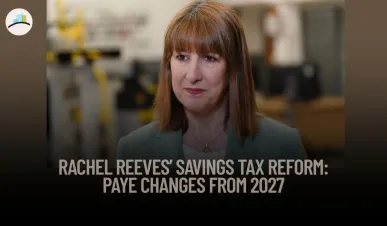
Chancellor of the Exchequer Rachel Reeves has approved a controversial but technically sophisticated move allowing HM Revenue & Customs (HMRC) to collect personal National Insurance (NI) numbers directly from banks and building societies. This regulatory shift, set to take full effect from 2027, is designed to clamp down on underpaid tax linked to interest from personal savings accounts.
More Articles:
The core idea is simple but game-changing: banks will provide HMRC with identifiable data on how much interest savers earn and who earned it. Armed with this, HMRC will be able to update individuals’ tax codes in real time—deducting unpaid taxes on savings interest directly from salaries via the Pay As You Earn (PAYE) system.
The move reflects a growing appetite among policymakers to close tax gaps using technology and real-time data sharing rather than relying on taxpayer honesty or legacy systems of self-assessment.
Why Is This Happening Now? The Bigger Picture
In the past two years, a combination of rising interest rates and frozen income tax thresholds has significantly increased the number of people exceeding their Personal Savings Allowance (PSA)—the amount of interest income individuals can earn tax-free. For basic-rate taxpayers, the allowance is £1,000 per year. For higher-rate taxpayers, it’s £500. Additional-rate taxpayers receive no allowance at all.
Due to the fiscal drag caused by threshold freezes, many savers who once fell comfortably below these limits are now exceeding them—often without realizing it. Meanwhile, interest rates offered on savings accounts have reached decade-long highs, further accelerating the risk of breaching PSA limits.
Recent HMRC data suggests more than 300,000 new individuals have entered the taxable bracket for savings interest. Until now, much of this tax has either gone uncollected or required complicated self-reporting. Reeves’ policy intends to change that permanently.
The Mechanics: How the New PAYE Collection Will Work
Starting in 2027, the system will function as follows:
-
Banks and building societies will collect your National Insurance number at the point of account creation or request it from existing customers.
-
These institutions will report your total interest earnings to HMRC, matched with your NI number.
-
HMRC will then determine whether your interest exceeds the PSA threshold based on your tax status.
-
If applicable, HMRC will update your PAYE tax code accordingly—deducting the tax owed from your salary, pension, or other income sources automatically.
For example, if you earn £1,500 in interest and you are a basic-rate taxpayer, the first £1,000 is tax-free. The remaining £500 would be taxed at 20% (i.e., £100). Under the new policy, HMRC would adjust your tax code so your employer deducts £100 more in tax over the course of the year.
This hands-off method will make tax collection more efficient but could leave many workers and pensioners facing reduced take-home pay without prior warning.
What It Means for Savers: Risks, Surprises, and Opportunities
This tax policy update has the potential to impact millions of UK savers, particularly those who:
-
Have multiple high-yield savings accounts
-
Are on the cusp of moving into a higher tax band
-
Fail to monitor their interest income regularly
The new system eliminates the opportunity for error—or discretion. In the past, individuals could "opt out" of declaring small sums, intentionally or unintentionally. Now, HMRC will know exactly what is owed, and they will act automatically.
The risk is that individuals may see their net salary reduced without clear communication. It may also place new burdens on employers, who will have to navigate frequent tax code adjustments across their payroll systems.
However, this is also an opportunity for proactive savers to optimize their tax position. Utilizing ISAs, for example, becomes even more crucial. Cash ISAs allow individuals to earn interest tax-free on balances up to £20,000 per year. That’s in addition to the PSA and outside the scope of the new automatic deduction system.
Strategic Recommendations for Savers in Light of the New Policy
-
Maximize Tax-Free Vehicles: Utilize ISAs to shield your savings interest from HMRC altogether. These will remain outside the PAYE collection regime.
-
Track Interest Accrual: Use financial planning tools or apps to monitor the interest you're earning across all accounts to stay within PSA limits.
-
Consolidate Accounts: Fewer accounts mean more transparent reporting and less fragmented data. This makes it easier to predict when you're near the tax threshold.
-
Review Your Tax Code Notices: Tax codes will become even more critical. A sudden change may indicate a new savings tax liability being deducted from your income.
-
Engage with Employers: As tax codes shift more frequently, employers and HR departments will play a role in communicating these changes to staff. Regular payroll check-ins will become essential.
THROW THESE PEOPLE OUT OF GOVERNMENT!!
— The Adventures of Lavender (@FarRightThugs) August 9, 2025
THIS IS ABUSE!!
Rachel Reeves gives green light for tax crackdown on savings accounts https://t.co/BzleWPqpNY
Looking Ahead: Automation and the Future of Personal Tax
This change is part of a broader evolution in UK taxation: the fusion of data analytics, automation, and real-time compliance. HMRC has steadily been moving toward a digital-first, frictionless enforcement model. This includes the development of AI-powered fraud detection systems, digital tax accounts for individuals, and pre-filled returns for the self-employed.
In the long term, PAYE-based taxation on savings could pave the way for real-time adjustments to other types of income—such as dividends, rental income, or even small business earnings. The centralization of NI numbers, tax records, and income data creates a tax ecosystem where every pound earned or saved is automatically categorized and taxed accordingly.
Disclaimer:
This article is for informational purposes only and does not constitute investment advice or a recommendation to buy or sell any securities. Procapitas does not provide personalized financial advice. All investment decisions should be made in consultation with a licensed financial advisor. The information presented is based on publicly available sources and Procapitas’ independent research and analysis, which are believed to be reliable but are not guaranteed for accuracy or completeness.



