
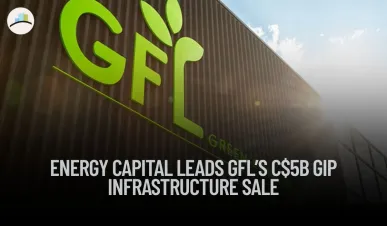
GFL Environmental Inc., Canada’s fourth-largest environmental services company, is nearing a transformative deal that may reshape its capital structure and long-term strategy. The company is in advanced talks to sell a controlling stake in its fast-growing subsidiary, Green Infrastructure Partners (GIP), and Energy Capital Partners (ECP) has emerged as the lead bidder.
More Articles:
The deal, valued at approximately C$5 billion including debt (roughly USD 3.1 billion), would represent one of the largest Canadian infrastructure transactions of 2025. While GFL has not yet confirmed the final bidder or timing, sources suggest that negotiations with ECP are at an advanced stage, with competing firms such as Neuberger Berman and General Atlantic still involved in parallel talks.
The Rise of GIP: From Bolt-On Asset to Billion-Dollar Infrastructure Giant
Originally a modest acquisition valued at just C$250 million in 2022, GIP has undergone aggressive scaling. GFL used a bolt-on acquisition strategy and operational expansion to turn GIP into a civil infrastructure powerhouse with projects in road building, utilities, drainage systems, bridge work, and sustainable site development.
As infrastructure investment gained attention amid government stimulus programs and rising demand for resilient public works, GIP quickly became a crown jewel within GFL’s portfolio. Its revenues are anchored by long-term contracts, recurring government infrastructure funding, and a low-cyclicality profile, making it particularly attractive to infrastructure-focused investors.
GIP’s EBITDA growth and improved margin profile made it a strategic candidate for monetization at a time when GFL is looking to pivot resources back into its core environmental services.
Energy Capital Partners: A Natural Fit for GIP's Long-Duration Asset Base
Energy Capital Partners brings a deep bench of experience managing infrastructure and utility-scale investments. Known for operating in capital-intensive sectors with stable cash flows—such as renewable power, waste-to-energy, and grid infrastructure—ECP’s investment thesis often revolves around decarbonization, infrastructure renewal, and energy transition.
GIP fits well within that mandate, particularly due to its exposure to public infrastructure upgrades tied to green building and sustainable urban development. For ECP, this deal would be a strategic expansion into Canadian infrastructure, potentially serving as a platform for further roll-ups or adjacent service verticals.
Moreover, ECP's history of working collaboratively with founders and management teams may appeal to GFL, which seeks to retain minority ownership and operational involvement post-sale, according to sources close to the matter.
What This Means for GFL’s Strategic Direction
Selling a stake in GIP is expected to generate substantial liquidity, which could be used in several key areas:
-
Debt Reduction: GFL has long carried a highly leveraged balance sheet from its aggressive acquisition strategy. The proceeds could support meaningful deleveraging, improving its credit profile and future borrowing costs.
-
M&A Repositioning: With GFL focusing on environmental services, funds may be redirected toward acquisitions in waste collection, recycling, organics processing, and waste-to-energy, areas with long-term sustainability growth potential.
-
Operational Focus: GFL may use this transaction to reduce complexity within its corporate structure, enabling tighter focus on core operations across North America, especially as environmental regulation and ESG scrutiny grow more intense.
-
Shareholder Return and Re-rating: The transaction could serve as a catalyst for a market re-rating. Investors may begin to value GFL more like a pure-play waste management firm, with stronger multiples, cleaner financials, and less capital drag from infrastructure exposure.
Energy Capital Partners is in advanced negotiations to buy a minority stake in GFL Environmental's infrastructure affiliate, with the deal expected to value the business at around $3.1 billion https://t.co/NdXkcYvCaD
— Bloomberg (@business) August 7, 2025
Competitive Tension Still in Play
While ECP is currently in the lead, other well-capitalized private equity players, including Neuberger Berman and General Atlantic, remain active in the bidding. Any of these firms could come forward with revised offers or terms that sway the deal in their favor.
The final outcome will depend not just on valuation but also on governance rights, future investment plans, and alignment on post-transaction strategy for GIP. GFL has shown interest in retaining a minority stake and possibly board representation, further complicating deal structuring.
Macro Backdrop: Why Infrastructure Is Hot Again
The surge in interest in GIP is also a reflection of broader market themes:
-
Inflation-Hedged Returns: Infrastructure assets offer long-term, contract-based returns that are often inflation-indexed—making them attractive in a high-rate environment.
-
Canadian Infrastructure Boom: Public infrastructure spending in Canada continues to rise, with government commitments toward urban transit, highways, and sustainable development playing into GIP’s core offerings.
-
Private Equity Dry Powder: With over $3 trillion in unallocated capital globally, PE firms are hunting for long-duration, low-volatility assets to anchor their portfolios, particularly in North America.
GIP's combination of size, growth trajectory, and government-backed revenue positions it as a rare, scaled opportunity in this sector.
Disclaimer:
This article is for informational purposes only and does not constitute investment advice or a recommendation to buy or sell any securities. Procapitas does not provide personalized financial advice. All investment decisions should be made in consultation with a licensed financial advisor. The information presented is based on publicly available sources and Procapitas’ independent research and analysis, which are believed to be reliable but are not guaranteed for accuracy or completeness.



