
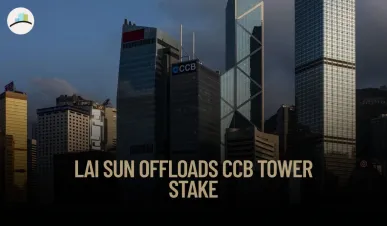
Lai Sun Development Co. Ltd., a longstanding mid-tier property developer in Hong Kong, is now actively pursuing the sale of its 50% stake in the prestigious CCB Tower located in Central. The decision is a strategic move to shore up liquidity ahead of a major debt maturity and highlights broader financial stress within Hong Kong’s real estate sector.
The 27-storey Grade A commercial building, developed in partnership with China Construction Bank, has become a focal point in Lai Sun’s refinancing strategy. The sale is expected to help the company reduce its debt burden and secure funding as it navigates a high-interest, low-demand commercial property environment.
More Articles:
Context: Lai Sun’s Liquidity Crunch and Refinancing Challenges
The proposed sale comes at a time when Lai Sun faces the maturity of a HK$3.5 billion loan due in October 2025. This loan is backed by Lai Sun’s Cheung Sha Wan Plaza, a commercial property in Kowloon. Although half of the lenders are reportedly supportive of the refinancing terms, the company remains under significant pressure to generate liquidity from asset disposals to close the funding gap.
Lai Sun has already announced intentions to dispose of up to HK$8 billion worth of assets across its portfolio. This initiative is not isolated; it is part of a broader strategy among mid-cap Hong Kong developers struggling with rising interest costs, reduced rental yields, and sluggish office demand. Asset sales have become an increasingly necessary lifeline as traditional refinancing options grow scarcer.
The Significance of CCB Tower in Lai Sun’s Portfolio
CCB Tower is not just any asset. Located at 3 Connaught Road Central, it sits in one of Hong Kong’s most valuable commercial zones. The tower includes a mix of banking halls, luxury retail, fine dining, and office space, with approximately 229,000 square feet under joint ownership between Lai Sun and China Construction Bank.
Its prime location, direct link to Central MTR station, and high-end amenities make it a trophy-grade asset in Lai Sun’s portfolio. As such, its partial sale reflects both the scale of financial pressure the firm is facing and its strategic prioritization of liquidity over long-term rental income.
Strategic Implications Behind the Stake Sale
-
Forced Asset Monetization in a Depressed Market
Lai Sun’s move illustrates the acute liquidity stress facing mid-tier developers. The market for Grade A office space in Hong Kong has been severely impacted since 2019, with prices falling over 30% and vacancy rates remaining elevated. Selling such a core asset during a downcycle suggests an urgent need for cash rather than opportunistic portfolio reshuffling. -
Tactical Capital Allocation
By unlocking capital from a high-value asset like CCB Tower, Lai Sun can refocus its balance sheet on critical short-term obligations. The proceeds are expected to go toward refinancing the Cheung Sha Wan Plaza loan and supporting working capital needs. -
Debt Risk Containment
With rising interest rates and tightening credit conditions, Lai Sun’s ability to deleverage through asset sales could provide some buffer against covenant breaches or credit rating downgrades. It also demonstrates proactive crisis management in the eyes of lenders and investors. -
Signal to the Market and Stakeholders
The disposal signals that Lai Sun is willing to part with premium assets to meet its debt obligations, a move that may increase lender confidence but could raise concerns among minority shareholders regarding future income streams and asset quality.
Lai Sun Development is seeking to sell its 50% stake in Hong Kong office building CCB Tower, according to people familiar with the matter, as the builder looks to shed assets https://t.co/WgqTWhZJ0W
— Bloomberg (@business) July 29, 2025
Sector-Wide Trends and Procapitas Insights
Lai Sun’s situation is not unique. Several of Hong Kong’s mid-sized property firms are experiencing the same set of challenges: high leverage, maturing debt, and declining property values. Here are Procapitas’ deeper insights:
-
Early Indicators of Broader Distress
Lai Sun’s move may trigger similar actions across the sector, as developers race to monetize assets in a shrinking buyer pool. The pressure is compounded by lower valuations and limited interest from institutional investors. -
Emergence of Private Credit
As traditional bank lending becomes more conservative, private credit funds are stepping in. These players are willing to provide bridge financing or buy stakes in distressed assets—but at a steep premium, and often with greater control rights. -
Asset Quality Fragmentation
While the CCB Tower may attract strong buyer interest, not all Lai Sun assets will. Investors are becoming increasingly selective, meaning companies may only be able to sell their best-performing properties, leaving the lower-tier ones to struggle. -
Rent Yield Compression as a Structural Challenge
Even trophy assets are yielding lower rental returns due to weak tenant demand. This compresses returns on investment, and limits upside for new owners unless macro conditions improve significantly. -
Downward Repricing Trend
Based on recent high-profile transactions, including sales of stakes in buildings like AIA Central and The Center, sellers are accepting discounts of up to 10–15% off peak valuations. This trend may continue through 2025 unless market fundamentals stabilize.
Disclaimer:
This article is intended for informational purposes only and does not constitute investment advice. Procapitas does not provide personalized financial recommendations. Always consult a licensed financial advisor before making investment decisions. Information is based on publicly available sources as of June 2025 and Procapitas’ independent research and analysis.



