
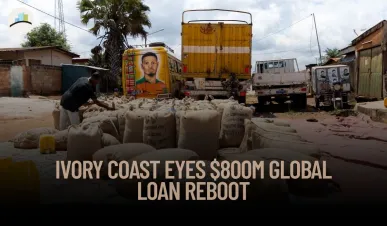
Abidjan is in active talks with a consortium of international banks—led by Standard Chartered and Société Générale—over an approximately $800 million financing package. The funds are intended to refinance maturing sovereign debt, improve borrowing terms, and support development priorities aligned with recently upgraded credit standings.
The deal is expected to complete swiftly, the government has stepped up engagement to leverage its upgraded credit rating, recently raised from BB‑ to BB by a major rating agency.
More Articles:
Credit Upgrade Enhances Access to Better Terms
Following its debt upgrade, Ivory Coast can now tap more favorable capital markets. Improved sovereign ratings eased investor concerns and paved the way for this refinancing deal. This reflects a broader macroeconomic stabilization trend, supported by strong cocoa export revenues and growing foreign exchange reserves.
A parallel €400 million debt-for-development swap led by a different banking group highlights a strategic blending of refinancing with environmental and social goals.
Focus Areas: Energy, Infrastructure & ESG Alignment
Unlike previous financing tied to healthcare or water infrastructure, this loan focuses on high-impact sectors such as energy, transportation, and logistics—critical to sustaining economic momentum. While Standard Chartered is structuring the main facility, Société Générale is expected to play a key role in aligning the funds with ESG-backed infrastructure goals.
The transaction likely includes ESG-linked covenants and development-linked conditionality, reflecting a global trend to tie public financing with measurable social and environmental outcomes.
Ivory Coast plans to raise $916 million in loans arranged by StanChart and SocGen to help fund its budget https://t.co/dvRyTKhErz
— Bloomberg (@business) July 31, 2025
Procapitas Insight — Modernizing Debt while Advancing ESG Development
This deal is more than debt rollover—it signals a transition toward debt sustainability and structured credit. Ivory Coast appears to be positioning itself as a model for emerging African economies using refinancing not just to manage liabilities, but to catalyze infrastructure investment and achieve developmental objectives.
The involvement of institutions like the World Bank and AfDB in related transactions underscores the growing role of international guarantees and sustainability-linked frameworks in emerging‑market sovereign finance.
Strategic execution will hinge on transparent governance, targeted deployment, and measurable outcomes in infrastructure and social services.
Disclaimer:
This article is intended for informational purposes only and does not constitute investment advice. Procapitas does not provide personalized financial recommendations. Always consult a licensed financial advisor before making investment decisions. Information is based on publicly available sources as of June 2025 and Procapitas’ independent research and analysis.



