
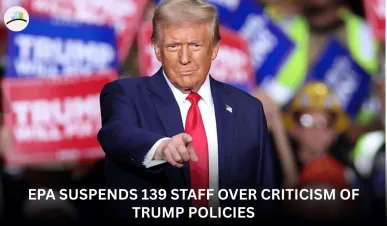
In a development that has sent shockwaves through Washington’s civil service and environmental policy circles, the U.S. Environmental Protection Agency (EPA) has placed 139 employees on administrative leave after they reportedly criticized former President Donald Trump or his policies in internal communications.
While the move is being framed as part of a broader effort to "restore impartiality and professionalism" within the agency, critics view it as politically motivated retaliation that could undermine scientific independence and chill dissent within federal agencies. The consequences of this shift extend far beyond internal HR policy—it raises urgent questions about the future of American environmental governance and the health of its democratic institutions.
#Breaking The Environmental Protection Agency on Thursday put on administrative leave 139 employees who signed a "declaration of dissent" with its policies, accusing them of "unlawfully undermining" the Trump administration's agenda.https://t.co/YmdIYRpkdw
— ABC7 Eyewitness News (@ABC7) July 4, 2025
Why Did This Happen?
The EPA action follows a recent internal audit revealing a pattern of employee emails and Slack messages that were allegedly critical of Trump’s environmental rollbacks during his first term. With Trump seeking a return to the White House in 2024 and already reshaping conservative policy blueprints behind the scenes, this preemptive move appears to be part of a broader "loyalty purge" in preparation for a possible second term.
Insiders believe this is aligned with the Project 2025 agenda—a conservative roadmap for a second Trump administration—which includes plans to dismantle climate regulations, reduce the EPA’s power, and reshape the federal workforce to ensure ideological alignment.
What’s Not Being Discussed Enough?
-
Weaponization of the Civil Service:
Historically, civil servants are protected from political interference to ensure continuity and impartial governance. This action challenges that norm and could set a precedent for purging dissenters in any future administration. -
Impact on Climate Policy Execution:
The sidelining of experienced staff—many of whom are climate scientists, regulatory experts, or long-serving environmental analysts—could slow or derail key initiatives, including clean air enforcement and renewable energy oversight. -
Deepening the 'Administrative State' Debate:
This reinforces the narrative among Trump allies that federal agencies are filled with so-called “deep state” actors, a claim used to justify sweeping bureaucratic reforms that could endanger long-term policy stability.
The Hidden Risks
-
Chilling Effect on Policy Integrity:
Federal workers may increasingly self-censor, undermining their ability to provide honest, data-driven advice—especially in politically sensitive areas like climate change or environmental justice. -
International Credibility Damage:
As the U.S. prepares to reassert leadership on global climate commitments, this controversy could erode trust among international partners, especially at upcoming climate summits like COP30. -
Workforce Attrition:
A mass exodus of qualified personnel could hollow out institutional memory and technical expertise—something that took decades to build within the EPA.
More Articles:
Historical Parallel: The Loyalty Oaths of the 1950s
The McCarthy-era “loyalty oaths” required federal employees to swear allegiance to U.S. values and disavow communist sympathies—often based on thin evidence. Today’s administrative leave orders echo that logic: ideological vetting cloaked in administrative procedure. This isn’t just history repeating—it’s a warning.
What’s the Opportunity?
This controversy could galvanize support for stronger federal employee protections, more transparent whistleblower channels, and legal safeguards against political coercion. For the climate movement, it could reignite urgency to defend not just the science but the scientists behind it.
Moreover, it puts the spotlight on the quiet power of federal agencies—reminding the public that elections don’t just shape the presidency, they shape entire ecosystems of policy, personnel, and enforcement.
Conclusion
The EPA's decision to sideline 139 employees for internal dissent about Trump is more than an internal HR shake-up—it’s a seismic signal of how politicized America’s federal agencies may become. As Trump eyes a 2024 return, the battle over the bureaucracy may be just beginning.



