
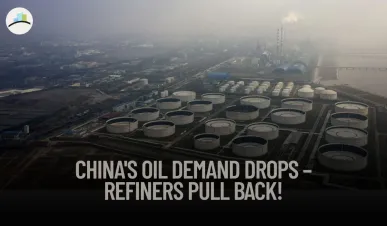
China’s Refiners Cut Crude Buying as Profit Margins Collapse
In a significant shift that may ripple across global oil markets, China’s independent oil refiners—often referred to as "teapots"—are dramatically scaling back crude oil purchases. This decision stems from a sharp drop in domestic demand, shrinking profit margins, and tightening access to discounted crude sources.
Most teapot refineries, located in China’s eastern Shandong province, are now operating at just 46–55% of capacity, among the lowest utilization rates seen since 2020. The refining downturn comes even as global oil prices remain relatively soft, highlighting how internal market dynamics, not global benchmarks, are dictating purchasing behavior.
Adding to their challenges, U.S. sanctions on Venezuela and Iran have limited access to heavily discounted crude—once a lifeline for these smaller refiners. Many teapots have had to tap more expensive Russian or Malaysian barrels, further compressing their already thin refining spreads.
More Articles:
Demand Slumps as EVs, LNG, and Economic Pressures Reshape Fuel Use
A critical factor contributing to the pullback in crude buying is China’s rapidly evolving energy mix. Electrification of transport, particularly in the commercial segment, is rising at a pace that has surprised many analysts. Electric trucks, buses, and light commercial vehicles are reducing diesel dependency in freight and logistics hubs.
Simultaneously, the adoption of LNG-fueled trucks in northern and central China has gained serious momentum, especially among logistics and construction players seeking lower operating costs. These two trends are undercutting diesel demand—the bread and butter of most Chinese refiners.
China’s industrial slowdown is another anchor weighing down consumption. Construction activity, manufacturing output, and energy-intensive industries like steel and cement have not rebounded strongly in 2025. As a result, gasoil and diesel demand is reportedly down double digits year-over-year, pushing fuel inventories higher and eroding the incentive to refine.
Crude Inventories Build as Storage Nears Capacity
The slowdown in demand has led to a stockpile build-up that is now creating its own bottleneck. With domestic storage tanks nearing capacity, many refiners are delaying or cancelling shipments altogether.
According to market intelligence, over 70 million barrels of Iranian crude are believed to be sitting in offshore tankers near Chinese ports, held in limbo due to payment, logistics, or policy constraints. Globally, China holds over 120 million barrels in floating and strategic storage—an unusually high number even by its standards.
This excess supply is now weighing down both onshore and offshore storage infrastructure. With limited space, small refiners have little incentive to continue purchasing at current demand levels. Many are opting to wait out the margin squeeze rather than risk negative cash flows.
State-Owned Refiners Maintain Operations—but Face Pressure Too
While private refiners are throttling down operations, state-owned oil giants like Sinopec and PetroChina are maintaining relatively high utilization rates, generally around 75–80%. These companies benefit from larger economies of scale, long-term supply contracts, and integrated downstream operations, which allow them to absorb short-term price volatility more effectively.
However, even these large refiners are not immune. Crack spreads—the profit made by refining crude into products—have narrowed significantly across the board. Some integrated players have reportedly shifted more output toward petrochemicals and export-grade fuels to offset domestic softness.
Procapitas Insights: What Lies Beneath the Slowdown
1. China’s EV Strategy Is Reshaping Crude Fundamentals
The country’s aggressive electrification policy is not merely a climate move—it is fundamentally reducing its structural oil demand. The EV share in new vehicle sales is now over 50%, and infrastructure rollout (charging, batteries, grid) is scaling fast. This is not a short-term fluctuation but a secular decline in internal combustion fuel dependency.
2. Strategic Stockpiling Is a Hidden Driver
China has long used low oil prices as opportunities to build up strategic reserves. Some analysts speculate that the slowdown in visible refinery purchases may mask quiet accumulation via state-led storage programs—securing energy independence for geopolitical hedging.
3. Consolidation Among Teapots Is Coming
With low run rates and rising break-even points, expect a wave of consolidation among independent refiners. Smaller players may seek mergers or tie-ups with larger state-backed or export-oriented firms to secure feedstock access and quota guarantees.
4. Global Impact May Be Underestimated
China accounts for roughly 15% of global crude demand. If its refiners continue underperforming, this may contribute to a sustained glut in global markets—especially amid new refining capacity coming online in the Middle East and Africa.
5. Petrochemical Shift Reflects Long-Term Play
Refiners are increasingly investing in ethylene, propylene, and other high-value petrochemical units, recognizing that traditional fuels may plateau. This shift from fuel to feedstock reflects a structural transformation in how China sees its oil future.
China’s oil refiners retreating from global markets signals more than just domestic issues; it’s a potential harbinger for crude prices. Geopolitical tensions and soft demand are weaving a narrative of caution. https://t.co/aHs9M1sFce
— 007ofWallST (@007ofWallSt) June 24, 2025
Strategic Watchpoints Going Forward
-
EV penetration trends: Sustained rise above 50% in EV sales would accelerate fuel demand decline.
-
U.S.-Iran sanctions: Any relaxation could allow access to cheaper barrels and improve margins.
-
Oil price trends: Further drops could tempt stockpiling but compress crack spreads further.
-
Refining margin recovery: Watch for signs of bottoming out in margins before a potential rebound in purchase activity.
-
LNG adoption scale: Tracking LNG vehicle data could help forecast diesel demand erosion.
Disclaimer:
This article is intended for informational purposes only and does not constitute investment advice. Procapitas does not provide personalized financial recommendations. Always consult a licensed financial advisor before making investment decisions. Information is based on publicly available sources as of June 2025 and Procapitas’ independent research and analysis.



