
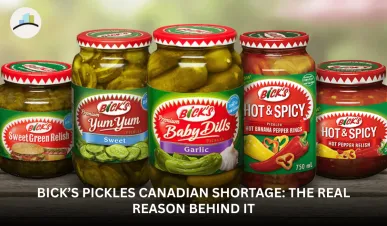
Bick’s Pickles Canadian Supply Struggle: What’s Really Behind the Shortages?
For decades, Bick’s Pickles Canadian jars have been a pantry staple — a familiar tang in summer BBQ burgers, deli sandwiches, and late-night snack plates. But recently, loyal customers have been met with an unexpected sight: empty shelf space where Bick’s Pickles used to sit in certain Canadian stores.
While it’s tempting to blame simple supply hiccups, the reality is far more complex — and the implications may stretch well beyond pickles.
The Tariff Trigger: Why Bick’s Pickles Are Missing
At the heart of the shortage is a tariff dispute between Canada and India, a major supplier of cucumbers and other produce used in pickle production. The increased costs from these tariffs ripple through the supply chain, impacting Bick’s Pickles Canadian manufacturing and distribution.
While Bick’s sources some cucumbers locally, seasonal limits and climate factors mean importing remains essential — and import tariffs can raise costs drastically. For a mass-market brand like Bick’s Pickles, this creates a pricing dilemma: absorb the extra cost or pass it on to consumers, risking market share.
Why This Is More Than Just a Pickle Problem
-
Supply Chain Fragility – The Bick’s Pickles situation exposes how even well-established Canadian food brands are vulnerable to geopolitical shifts.
-
Consumer Loyalty at Risk – Shoppers denied their go-to pickle brand may switch permanently, especially with rising competition from local artisan pickle makers and international brands.
-
Retail Strategy Shift – Some major Canadian retailers may prioritize stocking brands unaffected by tariffs, changing shelf space allocations.
A Warning for Canadian Food Manufacturing
The Bick’s Pickles Canadian shortage is a case study in how global trade policies directly affect everyday grocery items. Food manufacturing in Canada often relies on a delicate mix of local sourcing and international imports. When that balance is disrupted, brands face higher costs, unpredictable inventory, and potential brand erosion.
More Articles:
Hidden Opportunities
Interestingly, the shortage could open opportunities for smaller Canadian pickle producers to fill the gap. Domestic cucumber farming initiatives and tariff-free sourcing agreements could give rise to more “Made in Canada” pickle options, appealing to consumers looking for local alternatives.
Historical Parallel
In the 1980s, a trade dispute involving citrus imports led to the temporary disappearance of certain orange juice brands in Canada — and many never regained their market share. The Bick’s Pickles situation could play out similarly if shortages persist.
Why This Matters
This isn’t just about a missing jar of pickles. It’s a reminder that Canadian food security and brand availability can be shaped by trade policies thousands of miles away. For shoppers, it’s a subtle but important lesson in how interconnected — and vulnerable — our grocery shelves really are.



