
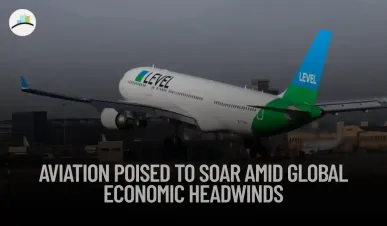
The global economy in 2025 is grappling with several challenges, including escalating trade tensions, inflationary pressures, and geopolitical uncertainties. These factors have led to cautious consumer spending and disrupted supply chains, affecting various industries worldwide.
Trade disputes, particularly between major economies, have introduced new tariffs and regulations, impacting international commerce. Inflation rates remain elevated in several regions, prompting central banks to implement tighter monetary policies. Additionally, geopolitical conflicts have further strained economic stability, leading to volatility in financial markets.
Aviation Industry Defies the Odds
Contrary to the broader economic slowdown, the aviation industry is demonstrating remarkable resilience. The International Air Transport Association (IATA) projects a global airline profit of $36.0 billion in 2025, up from $32.4 billion in 2024. This growth is attributed to robust passenger demand, especially in emerging markets, and a significant rebound in international travel.
Lower fuel prices have also contributed to improved profit margins for airlines. Despite challenges such as aircraft delivery delays and supply chain disruptions, the industry is adapting by optimizing operations and exploring alternative revenue streams.
Also Read:
Key Factors Driving Aviation Growth
-
Surge in Passenger Demand: Post-pandemic travel enthusiasm has led to increased bookings, particularly in Asia and the Middle East.
-
Technological Advancements: Airlines are investing in newer, more fuel-efficient aircraft to reduce operational costs and environmental impact.
-
Diversification of Services: Many carriers are expanding into cargo transport and offering premium services to boost revenue.
Challenges Ahead
Despite the positive outlook, the aviation sector faces several hurdles:
-
Aircraft Delivery Delays: Manufacturers like Boeing and Airbus are experiencing production bottlenecks, leading to postponed deliveries and fleet expansion plans.
-
Regulatory Hurdles: New trade policies and aviation regulations require airlines to adapt swiftly to maintain compliance.
-
Environmental Concerns: The push for sustainable aviation fuel (SAF) and carbon neutrality by 2050 presents both opportunities and challenges for the industry.
The global economy faces many headwinds, but the aviation industry is expected to defy them https://t.co/MHy7U1i6ND
— luciano dimitriu (@DimitriuLuciano) June 2, 2025
Future Outlook
The aviation industry's ability to navigate economic turbulence showcases its adaptability and strategic planning. With continued investment in technology, infrastructure, and customer experience, airlines are well-positioned to capitalize on the resurgence in global travel demand.
Source: CNBC – Global Economy Faces Headwinds, but Aviation Is Expected to Defy Them



