
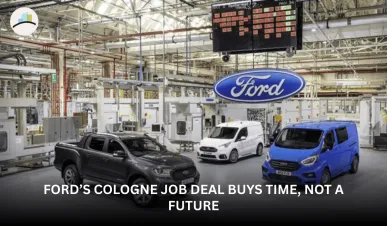
A new agreement between Ford and its German works council to protect jobs at the company’s Cologne plant through 2032 is being hailed as a win for labor — but it may also be masking deeper structural challenges in the automotive industry’s race toward electrification.
While the deal temporarily halts job cuts and provides a sense of stability for workers, it’s ultimately a strategic pause rather than a transformational shift. Ford, like many legacy automakers, is walking a tightrope: balancing employee retention and public relations with the harsh economic realities of transitioning to electric vehicles (EVs) in an increasingly competitive and cost-sensitive market.
Why Did This Happen?
Cologne is Ford’s flagship EV manufacturing site in Europe. The company is preparing to scale up production of its electric Explorer SUV and future models, and labor stability is essential to meeting these goals on time. However, Ford’s track record of layoffs across Germany and the UK since 2023 had generated deep distrust among unionized workers, prompting pressure from IG Metall and local leaders to secure job guarantees.
This agreement is less a long-term growth vision and more a truce — designed to prevent further disruption as Ford navigates technological and geopolitical shifts that are reshaping the global auto industry.
What’s Not Being Discussed Enough?
-
Short-term security vs. long-term competitiveness
Locking in job protections offers peace of mind now but may weaken Ford’s ability to adapt if market conditions change rapidly. -
The illusion of a 2032 guarantee
While 2032 sounds far off, in auto production terms, it's just two product lifecycles — and Ford could still restructure once the EV platform matures. -
Strategic vulnerability to Chinese EV makers
With rising pressure from lower-cost, tech-savvy Chinese EV brands entering Europe, Ford’s labor-heavy structure could become a cost disadvantage if not offset by productivity gains.
More Articles:
Hidden Risks and Opportunities
-
Risk: Rigid labor costs may hurt Ford’s agility in an evolving EV market
-
Risk: Postponing restructuring could lead to sharper shocks later this decade
-
Opportunity: This deal creates time for reskilling and digital training, ensuring Cologne’s workforce can compete in a software-driven manufacturing future
Why This Is Important
This agreement is more than a labor negotiation — it reflects a broader challenge facing legacy automakers across Europe. How do you protect industrial jobs in regions reliant on old technologies while trying to compete with faster, leaner, more tech-oriented rivals?
Ford’s Cologne pact is an attempt to thread that needle. But unless this breathing room is used to actively transform operations and skillsets, today's relief may become tomorrow’s crisis.



