
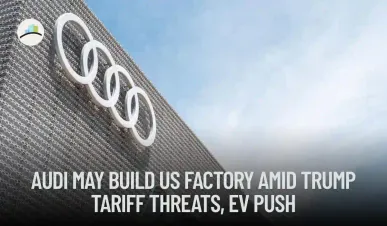
You’d be forgiven for thinking Audi’s potential plan to build a car plant in the U.S. is just another "automaker-goes-local" story. But if you look closer, there’s way more under the hood. This isn’t only about making cars in America—it’s about staying in Trump’s good graces and navigating a trade landscape that’s getting more unpredictable by the minute.
Here’s what’s really happening—and why it matters.
So, What’s the Deal?
According to a report from Der Spiegel, Audi (yes, the German luxury brand under the Volkswagen umbrella) is weighing whether to set up a manufacturing plant in the U.S. The goal? To sidestep Donald Trump’s proposed 10% blanket tariff on all imports if he returns to the White House.
That’s a big move. Audi already builds cars in Mexico and ships them up north. But with the threat of tariffs looming, those savings could vanish. Manufacturing directly in the U.S. might be the only way to keep cars competitively priced for American buyers—without eating into profits or jacking up prices.
But This Is About More Than Just Money
Let’s be real: This isn’t just a business decision—it’s a political one.
Trump, who’s ramping up for a potential return to the presidency, has been loud and clear about bringing manufacturing back to the U.S. And automakers like Audi, with strong German roots and massive export volumes, are squarely in his line of sight.
Back in 2017–2020, Trump used similar pressure tactics to push companies like Toyota and Foxconn to commit to U.S. investments. He didn’t even have to enact tariffs half the time—just the threat of action was enough to nudge CEOs into action. This could be round two of that same playbook.
Audi’s consideration to build in the U.S. might be less about economic logic, and more about political self-preservation.
The Risk They’re Taking
Here’s the kicker: Audi would be making a multibillion-dollar bet based on a political outcome that’s still wildly uncertain.
Setting up a U.S. plant isn’t a quick pivot. It takes years to scout a location, get regulatory approvals, hire and train workers, build supply lines, and get production humming. All of that assumes that Trump wins—and that his policies actually materialize.
But if he doesn’t win? Audi could find itself stuck with an expensive new operation that doesn’t fit its long-term strategy, all while duplicating production it already has in Mexico or Germany.
And don’t forget—Audi’s EVs like the Q8 e-tron and A6 e-tron aren’t simple to produce. They rely on specialized battery tech and cutting-edge software. Moving that entire process stateside is a logistical nightmare.
"Audi could build plant in US to placate Trump, Spiegel reports" - Reuters #SmartNews https://t.co/LyKEnGFO9D
— Dominic Favazzo 🎸🥁🎤🎧🎹🎷🪇 (@FavazzoDom63444) June 20, 2025
Germany’s Auto Giants Are Feeling the Squeeze
Audi isn’t alone. German automakers are quietly scrambling to adapt to a world where global trade rules no longer feel stable.
In Europe, they’re fending off a wave of Chinese EV imports that undercut on price. In the U.S., they’re dealing with rising protectionism. And at home, they’re grappling with strict emissions rules and high labor costs. There’s pressure from every direction.
That’s why BMW’s building up its South Carolina plant. Mercedes-Benz is expanding U.S. EV output. Now Audi might be joining the club—because the old strategy of “build in Germany, export everywhere” just doesn’t work anymore.
More Articles:
What No One's Really Talking About
Let’s talk about the stuff that gets left out of most headlines:
-
Trump doesn’t need to be in office to change business decisions. The mere idea of him returning has companies reshuffling supply chains already.
-
This could reshape how and where high-end cars get built. Once the factory is up and running, it’s not just for now—it affects the next decade of models and markets.
-
It signals how much politics now drive business. CEOs aren’t just responding to markets. They’re responding to campaign speeches.
Why It All Matters
At first glance, this might seem like a story about where a car gets built. But zoom out, and it’s really about how fragile global trade has become—and how even a company as powerful as Audi can get caught in the political crossfire.
If Audi does go ahead and build in the U.S., it’s not just about avoiding a tariff. It’s about preparing for a world where global brands are increasingly expected to act local—not just to sell more, but to survive.



