
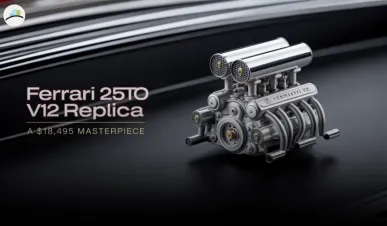
Amalgam’s Ferrari 250 GTO V12 Replica: A Celebration of Ferrari’s Legacy and the High-End Collectibles Market
Amalgam Collection, renowned for producing the world’s finest automotive replicas, has unveiled an extraordinary tribute to Ferrari’s legendary 250 GTO. In a move that has taken the world of luxury car collectors by storm, the company is offering a 1:4-scale replica of the Ferrari 250 GTO’s V12 engine, priced at a staggering $18,495. This remarkable piece of craftsmanship is limited to just 250 units, each one meticulously handcrafted and certified by Ferrari Classiche.
SL65 AMG Black Series " The Dark Side of Mercedes-AMG".
— Michael Kübler (@F1Mike28) October 10, 2025
Mercedes-AMG M275 6.0L V12 biturbo engine Handcrafted by Michael Kübler @f1mike28 in Germany Affalterbach. pic.twitter.com/eo0ZG0RuSj
But what does this replica signify beyond its immense attention to detail and exclusivity? Let’s delve into the implications of this release, the significance of the 250 GTO in automotive history, and the broader context of the luxury collectibles market.
MORE ARTICLES:
The Craftsmanship Behind the Replica: A True Work of Art
At first glance, the replica of the Ferrari 250 GTO V12 may appear to be just another luxury collectible. However, a closer inspection reveals that it’s much more—a testament to engineering precision and dedication to Ferrari’s heritage. Amalgam engineers have worked closely with Ferrari’s restoration arm, Ferrari Classiche, to ensure every detail of the replica engine is accurate to the original. Each model undergoes over 325 hours of handcrafting, a process that includes using CAD data from scans of the original engine. This level of attention to detail is unprecedented in the world of automotive miniatures.
Key Specifications of the Ferrari 250 GTO V12 Replica:
| Feature | Specification |
|---|---|
| Model Scale | 1:4 Scale |
| Price | $18,495 USD |
| Material | Carbon fiber, metal, and plastic components |
| Engine Type | 2,953cc Tipo 168 V12 |
| Production Units | Limited to 250 units |
| Crafting Time | 325 hours per model |
| Certification | Ferrari Classiche Historian Approval |
| Dimensions (L x W x H) | 12 inches long, 6 inches high |
Why Is This Important?
This model is far more than a collector’s item—it reflects a shift in how automotive history is preserved and appreciated. The V12 engine of the Ferrari 250 GTO is one of the most iconic powertrains in motorsport history. Its technical design and influence continue to shape Ferrari’s philosophy and branding today. For many enthusiasts, owning a piece of this legacy, even in miniature form, represents an opportunity to connect with Ferrari’s racing past, one of the cornerstones of the brand’s identity.
The decision to create such a limited-run replica also highlights the growing demand for ultra-high-end collectibles. As traditional supercar ownership becomes increasingly inaccessible to all but the wealthiest buyers, the market for finely crafted scale models has seen an uptick in interest. These items not only serve as tributes to iconic cars but are also seen as investments, with their value often increasing over time.
The Legacy of the Ferrari 250 GTO: More Than Just a Car
The Ferrari 250 GTO, which debuted in 1962, is often cited as one of the greatest cars of all time. Powered by a 3.0-liter V12 engine, the GTO was designed to compete in the FIA's Group 3 racing category. The car’s success on the racetrack, coupled with its beauty and rarity, has made it a legend. With only 39 units ever produced, the 250 GTO is considered one of the most valuable cars in the world, often fetching upwards of $51 million at auction.
The V12 engine in the 250 GTO was developed by Ferrari’s long-time engineer Gioacchino Colombo, whose work with Ferrari’s V12 program set the foundation for the brand’s success in endurance racing. The engine was notable for its smoothness, power delivery, and reliability, characteristics that would come to define Ferrari’s high-performance vehicles for decades.
Business Implications and Market Trends
The release of the 1:4-scale Ferrari V12 model by Amalgam Collection highlights a growing trend within the luxury automotive sector—an increased focus on creating premium, collectible items that allow car enthusiasts to connect with automotive history in a new way.
In recent years, brands have recognized the demand for these high-end models, and companies like Amalgam, along with other manufacturers of luxury memorabilia, have responded by producing highly detailed scale models that often come with significant price tags. As a result, this market is no longer just for hobbyists; it has become a serious segment of the luxury goods market, attracting wealthy collectors, investors, and automotive purists.
The price of these models, while eye-watering, also reflects a broader trend in the high-end luxury market, where the demand for exclusive, rare items is at an all-time high. As supercar prices soar, collectibles like these represent a way for those unable to afford the real thing to own a piece of history.
Historical Parallels: A New Era of Collectible Cars
In a sense, the trend towards collectible car models mirrors the rise of luxury watchmaking in the early 2000s. As digital technology made timekeeping devices more accurate and accessible, the market for mechanical watches exploded. Similarly, as modern supercars have become more attainable and technologically advanced, the demand for exclusive and historically significant models has surged.
Additionally, the rise of online auction platforms and the increasing transparency of the collectibles market have made it easier for buyers and sellers to exchange rare and limited-edition items. The market for these high-end automotive models is expected to continue to grow as more collectors look for investment opportunities in luxury automotive memorabilia.
Conclusion: The Ferrari 250 GTO V12 Replica as a Milestone
The release of the 1:4-scale Ferrari 250 GTO V12 replica by Amalgam Collection is not just a product launch; it’s a statement about the growing importance of automotive history in the collectibles market. It represents a perfect intersection of craftsmanship, technology, and passion for one of the most revered brands in the automotive world. For collectors, it’s an opportunity to own a tangible piece of Ferrari’s illustrious legacy, and for enthusiasts, it’s a way to connect with a car that represents the pinnacle of Ferrari’s engineering achievements.
As the market for high-end collectibles continues to expand, items like the Ferrari 250 GTO replica are likely to become even more valuable, not only for their artistic and engineering merit but also as sound investments in the ever-growing luxury market.



