
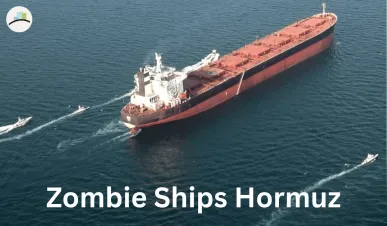
Unusual and mysterious vessels known as “zombie ships” are sailing through the highly restricted Strait of Hormuz despite efforts by Iran to block the waterway amid ongoing war and geopolitical tensions in the Middle East.
The strait a strategic chokepoint for global oil and gas shipments remains effectively closed to most commercial vessels as Iran threatens attacks on foreign ships following escalating conflict involving the United States, Israel, and Iran.
However, recent tracking data shows at least two vessels that appear to be scrapped or decommissioned ships including a liquefied natural gas carrier and a vehicle transport ship sailing through the strait after assuming the identities of ships that were dismantled years ago.
“Zombie” ships have suddenly surfaced in the shipping chokepoint, amid Iran’s ongoing threats to attack any vessels that try to enter. Full story: https://t.co/wpNkvHkdMU pic.twitter.com/ubE9HT1Mu2
— news.com.au (@newscomauHQ) March 23, 2026
What Are “Zombie Ships”?
“Zombie ships” are vessels that have previously been scrapped or decommissioned, yet suddenly reappear on ship tracking systems as if they are still active and legitimate. These ships are believed to be using false identities of older vessels, allowing them to slip through maritime restrictions that would otherwise block them from passing.
One such vessel, identified by tracking data as LNG Jamal, had been reported as having been sent to a demolition yard in Bangladesh before resurfacing in the Strait of Hormuz in mid‑March. Another vessel showing up under the name Nabiin was also scrapped years ago but unexpectedly navigated the strait in recent days.
Analysts say these ships might be attempting to evade sanctions, avoid detection, or simply find routes to transport energy supplies despite the global disruption caused by the conflict.
Why Is Hormuz Blocked?
The Strait of Hormuz is one of the world’s most critical maritime passages, connecting the Persian Gulf with the Gulf of Oman and serving as a gateway for roughly 20% of global seaborne oil and liquefied natural gas supplies.
Since late February 2026, amid the Middle East war, Iran’s Islamic Revolutionary Guard Corps (IRGC) has issued warnings and attacks on commercial vessels, effectively locking down the shipping lane by making passage highly risky. Many shipowners have avoided the strait entirely due to threats of missile strikes, drones, and other conflict‑related dangers.
With conventional shipping routes blocked and insurance costs soaring, the appearance of “zombie ships” comes as shipping firms scramble to find ways to move cargo through or around the crisis‑hit waters.
MORE ARTICLES:
How Are These Ships Getting Through?
Experts believe several tactics are being used:
- False vessel identities: Ships use the names of scrapped or decommissioned vessels to broadcast legitimacy to tracking systems.
- Iran‑approved passage: Some vessels appear to have Iran’s tacit permission to transit, especially those tied to buyers or partners in places like China and India.
- Turning off signals: Ships may switch off Automatic Identification System (AIS) signals to avoid detection, only reappearing once clear of high‑risk zones.
These methods reflect both the complexity of maritime tracking and the growing shadow economy surrounding shipping in conflict zones.
What This Means for Global Trade and Energy Markets
The emergence of zombie ships highlights how the Iran‑US‑Israel war crisis is disrupting global energy routes. The blockade of Hormuz has forced many commercial vessels to stay anchored outside the strait, waiting for clarity or rerouting by longer seas routes such as around the southern tip of Africa.
For industries dependent on Middle East oil and gas, this disruption is adding strain to already volatile markets, contributing to higher energy prices and more uncertainty in global supply chains.
The continued movement of even a handful of vessels even if under false identity underscores how desperate and innovative operators have become in maintaining critical supply routes in the face of conflict.



