
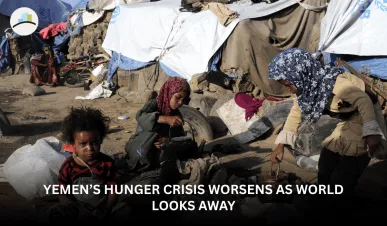
Yemen’s Hunger Crisis: How the World’s Neglect is Feeding a Famine
More than 17 million Yemenis, including over a million children, are facing acute hunger. The numbers are staggering, but the crisis is not new — it is worsening, and more alarmingly, it’s being normalized. This humanitarian catastrophe, rooted in nearly a decade of civil war, is no longer front-page news, but that’s precisely what makes it so dangerous.
UN warns that 18M people in Yemen could face hunger between September and February, as years of war and aid restrictions push the country deeper into crisis pic.twitter.com/WkkpULpPRN
— TRT World Now (@TRTWorldNow) July 9, 2025
Why Is This Happening?
At its core, the crisis in Yemen is a man-made disaster. Years of brutal conflict between the Iran-backed Houthi rebels and the Saudi-led coalition have decimated infrastructure, strangled supply chains, and collapsed the economy. But recent developments have added fuel to the fire:
-
Frozen international aid: Donor fatigue is setting in. In 2022, the UN received only 54% of the $4.3 billion it requested for Yemen — and 2023 was no better.
-
Global inflation and food prices: The war in Ukraine disrupted global wheat exports. Yemen, which imports over 90% of its food, was hit hard.
-
Climate shocks: Droughts and floods are undermining what little agriculture remains, making local food production nearly impossible.
This crisis isn’t just about hunger — it’s about systemic collapse in a country where survival depends almost entirely on external support.
What’s Not Being Talked About Enough?
-
Donor disengagement has become political. Major donors like the U.S., UK, and Gulf states are quietly shifting focus to Ukraine, Sudan, and Gaza. Yemen, once a key geopolitical interest, has slipped into the shadows.
-
Weaponization of hunger. There are credible reports of food aid being blocked or redirected by armed groups to maintain control over populations. This turns starvation into a tool of war.
-
Economic decimation. The Yemeni rial has lost over 80% of its value since the conflict began. A bag of flour that cost 1,500 rials in 2015 now costs over 10,000 in some areas. This inflation has rendered ordinary Yemenis completely powerless.
What Are the Hidden Risks and Consequences?
-
Rise of a “lost generation”: Malnourished children are not just stunted physically — cognitive damage is long-term. This crisis could cripple Yemen’s future workforce for decades.
-
Terrorist resurgence: Desperation breeds radicalization. Al-Qaeda in the Arabian Peninsula (AQAP) and ISIS-Yemen are exploiting the vacuum created by state failure and hunger.
-
Regional spillover: A destabilized Yemen impacts global trade via the Bab el-Mandeb Strait, a key maritime chokepoint. Further deterioration risks shipping disruptions and energy security — especially for Europe and Asia.
MORE ARTICLES:
Historical Parallels
Yemen today is reminiscent of Somalia in the early 1990s — a conflict-ravaged state with international apathy, a collapsed economy, and food aid manipulated by warlords. The difference? Yemen’s geostrategic location makes inaction far more dangerous.
Why This Story Matters Now
While headlines swing between wars, elections, and tech breakthroughs, Yemen’s crisis worsens under the radar. Ignoring this isn’t just a humanitarian failure — it’s a strategic blunder. Global actors risk creating a failed state in one of the world’s most strategically vital regions.
The choice isn’t between aid and war. It’s between re-engagement and irreversible collapse.



