
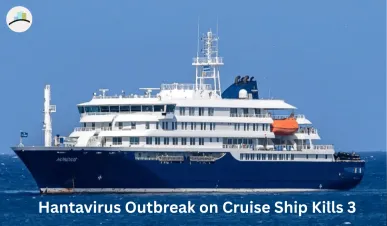
A luxury expedition cruise has turned into a public health scare after reports confirmed that three people died from hantavirus infection aboard the vessel M/V Hondius during an Atlantic voyage. The outbreak has raised urgent questions: How did a rare virus appear on a cruise ship? Is it spreading? And should travelers be worried?
Here’s a complete, deep-dive, Google Discover–ready breakdown of the hantavirus outbreak, what we know so far, and what it means for cruise passengers worldwide.
What Happened on the M/V Hondius Cruise Ship?
The M/V Hondius, an expedition cruise ship known for Arctic and remote voyages, reported a suspected hantavirus outbreak after several passengers fell ill during the journey.
- At least three deaths have been linked to hantavirus infection
- Multiple passengers reportedly showed flu-like symptoms
- The ship was operating in remote regions, making early diagnosis difficult
Health officials believe the outbreak may be linked to exposure to contaminated environments, rather than person-to-person transmission.
What Is Hantavirus and How Dangerous Is It?
Hantavirus infection is a rare but serious viral disease primarily spread through contact with rodent urine, droppings, or saliva.
Key Facts:
- It does not usually spread between humans
- Infection happens when people inhale virus particles from contaminated air
- It can lead to Hantavirus Pulmonary Syndrome (HPS) — a severe respiratory illness
Symptoms include:
- Fever and fatigue
- Muscle aches
- Headaches and chills
- Severe breathing difficulty (in advanced stages)
👉 The fatality rate can be as high as 35%–40%, making it one of the more dangerous viral infections despite being rare.
How Did Hantavirus Reach a Cruise Ship?
This is where things get interesting — and concerning.
Unlike viruses like COVID-19, hantavirus is not typically associated with cruise ships. Experts suspect:
- Rodent exposure during shore landings in remote areas
- Contaminated storage or supply areas onboard
- Environmental exposure in polar or wilderness regions
Because the M/V Hondius specializes in expedition travel, passengers may have come into contact with natural habitats where rodents carry the virus.
Is This a Full Outbreak or Isolated Cases?
Right now, officials are being careful with the word “outbreak.”
- Cases appear limited, not widespread
- No confirmed human-to-human transmission
- Risk remains low for the general public
However, the fact that multiple deaths occurred in one voyage has triggered global health attention.
Why This Case Is Getting Global Attention
This incident is trending globally for a few reasons:
1. Rare Virus in an Unusual Setting
Hantavirus is usually linked to rural or forest exposure, not cruise ships.
2. High Fatality Rate
Even a few cases can be deadly, making headlines instantly.
3. Cruise Industry Sensitivity
After COVID-19, any onboard outbreak raises immediate concern among travelers.
Should Cruise Travelers Be Worried?
Let’s be clear panic is not justified, but awareness is.
Low Risk for Most Travelers:
- Hantavirus does not spread easily
- Cruise ships are not natural hotspots for this virus
Practical Advice:
- Avoid contact with wild rodents or droppings
- Follow hygiene guidelines during excursions
- Report flu-like symptoms early during travel
Expert Insight: Why Early Detection Matters
The biggest challenge with hantavirus is that early symptoms look like normal flu. By the time severe symptoms appear, the condition can escalate quickly.
That’s why:
- Early reporting
- Rapid medical evaluation
- Awareness among travelers
…can make a life-saving difference.
What Happens Next?
Authorities are expected to:
- Conduct a full epidemiological investigation
- Trace possible exposure sources onboard
- Review safety protocols for expedition cruises
The cruise industry may also introduce stricter environmental health checks, especially for ships operating in remote regions.



