
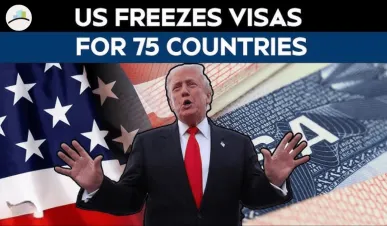
In a sweeping and controversial move, the Trump administration has announced that the United States will halt immigrant visa processing for citizens of 75 countries, starting January 21, 2026. The action — one of the broadest changes yet in U.S. immigration policy — is designed to tighten entry rules and reassess how visa applicants are vetted.
This decision marks a major shake‑up for millions of would‑be immigrants and raises fresh questions about U.S. foreign relations, economic impact, and the future of legal immigration pathways. Below we unpack who’s on the list, why this is happening, and what it could mean for affected families and governments worldwide.
US Visa Shock: 75 Countries Paused.
— LAFDA NEWS OFFICIAL (@lafda_news) January 14, 2026
Effective Jan 21. The US stops processing immigrant visas for nations with high "public benefit" rates.
Hit List: Pakistan, Bangladesh, Nepal
Safe List: India
Trump's "America First" policy just went global. The panic in the diaspora is real. pic.twitter.com/cdCUWVgsdw
What Exactly Is Being Paused?
The U.S. State Department is indefinitely suspending immigrant visa processing for nationals of 75 countries beginning January 21, 2026. That means people from those countries who applied for permanent immigrant visas at U.S. embassies and consulates will see decisions paused or denied until further notice.
This action does not apply to non‑immigrant visas such as tourist, business, student, or temporary travel visas — those remain in effect — but the immigrant visa pipeline (including family‑based green cards) is being shut down for now.
Full List of the 75 Countries Affected
Here’s the complete list of nations where immigrant visa processing will be halted from January 21, 2026:
-
Afghanistan
-
Albania
-
Algeria
-
Antigua and Barbuda
-
Armenia
-
Azerbaijan
-
Bahamas
-
Bangladesh
-
Barbados
-
Belarus
-
Belize
-
Bhutan
-
Bosnia and Herzegovina
-
Brazil
-
Myanmar
-
Cambodia
-
Cameroon
-
Cape Verde
-
Colombia
-
Côte d’Ivoire
-
Cuba
-
Democratic Republic of the Congo
-
Dominica
-
Egypt
-
Eritrea
-
Ethiopia
-
Fiji
-
The Gambia
-
Georgia
-
Ghana
-
Grenada
-
Guatemala
-
Guinea
-
Haiti
-
Iran
-
Iraq
-
Jamaica
-
Jordan
-
Kazakhstan
-
Kosovo
-
Kuwait
-
Kyrgyzstan
-
Laos
-
Lebanon
-
Liberia
-
Libya
-
North Macedonia
-
Moldova
-
Mongolia
-
Montenegro
-
Morocco
-
Nepal
-
Nicaragua
-
Nigeria
-
Pakistan
-
Republic of the Congo
-
Russia
-
Rwanda
-
St. Kitts and Nevis
-
St. Lucia
-
St. Vincent and the Grenadines
-
Senegal
-
Sierra Leone
-
Somalia
-
South Sudan
-
Sudan
-
Syria
-
Tanzania
-
Thailand
-
Togo
-
Tunisia
-
Uganda
-
Uruguay
-
Uzbekistan
-
Yemen
Why Is the U.S. Doing This?
The Trump administration’s official explanation centers on the “public charge” rule — a long‑standing U.S. policy that allows visa officers to deny permanent residency to those deemed likely to rely heavily on public benefits such as welfare or government assistance.
State Department officials say the pause will allow the agency to reassess screening procedures and ensure that visa applicants do not become a financial burden once inside the U.S.
White House spokespeople have framed the move as part of a broader effort to end abuse of the U.S. immigration system and defend American taxpayers.
MORE ARTICLES:
Who Is Not Affected?
While this move affects 75 nations worldwide, some important groups are not included:
-
Tourists, business travelers, and temporary visa applicants will still be processed.
-
Dual nationals whose primary passport is from a country not on the list could remain eligible.
-
Exemptions may apply for diplomats, national‑interest cases, or people whose visas were already printed before January 21.
Notably, China is not on the 75‑nation list, though several of its neighbors and regional partners are.
What Does This Mean for Families and Immigrants?
This suspension is being described as potentially devastating for families and immigrants who have been waiting months or years for approval of green cards or legal permanent residency.
For many, this pause could:
-
Delay family reunification for virtually indefinite periods.
-
Put jobs and relocation plans on hold.
-
Increase legal costs for those seeking waivers or alternative paths to the U.S.
Some advocacy groups warn this could impact hundreds of thousands of people annually, especially from Africa, Latin America, and the Middle East.
How Is This Being Viewed Domestically and Globally?
Supporters of the policy say it strengthens U.S. borders and protects public resources, especially in an era of tight immigration enforcement and economic concerns.
Critics, however, argue that this move disproportionately targets people from poorer nations and unfairly restricts legal, orderly immigration routes — potentially damaging U.S. diplomatic relations and family unity.
Human rights advocates have already raised alarms, saying that sweeping freezes of this sort could amount to “de‑facto bans” on entire populations from entering the U.S. legally.
Conclusion
Starting January 21, 2026, the United States will pause immigrant visa processing for citizens of 75 nations — a historic action with far‑reaching implications for millions of aspiring migrants and their families. The official goal, according to the Trump administration, is to tighten screening and reduce reliance on public benefits, but critics argue it will create new hardships and diplomatic concerns. This move underscores just how dramatically U.S. immigration policy has shifted in recent years — and how much is still at stake for people around the world.



