
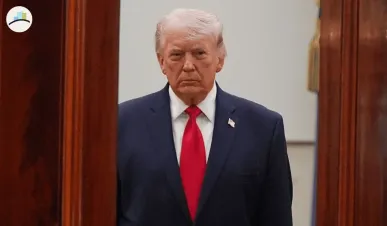
The standoff between the United States and Iran has reached one of its most dangerous moments in recent years.
Former U.S. President Donald Trump has reportedly issued a final ultimatum, warning that Iran’s critical infrastructure could be “destroyed within hours” if certain demands are not met. At the same time, Iran has taken an extraordinary step by calling on civilians to gather around power plants and form what officials describe as “human shields.”
This combination of military threat and civilian mobilisation has significantly escalated fears of a large-scale conflict that could impact not just the Middle East, but the global economy.
What Trump’s Ultimatum Actually Means
Trump’s statement is not just political rhetoric. It signals a potential military strategy focused on infrastructure targeting, which is different from traditional battlefield conflict.
Key elements of the ultimatum:
- Iran has been given a very short deadline (reportedly 4 hours)
- Critical infrastructure such as power plants and energy systems may be targeted
- The warning suggests the ability to execute a rapid, large-scale strike
- The demand is tied to geopolitical tensions involving the Strait of Hormuz
This kind of ultimatum is designed to create maximum pressure in minimum time, forcing a quick response from the opposing side.
Tehran’s Response: Human Shields Around Power Plants
Iran’s reaction has been equally dramatic and unusual.
Authorities have urged citizens to gather at key infrastructure locations, especially power plants, to prevent or discourage potential strikes.
What this response includes:
- Large groups of civilians forming human chains around facilities
- Calls for nationwide participation as a show of resistance
- Messaging focused on protecting national assets and sovereignty
- Public mobilisation framed as a patriotic duty
This move is highly controversial because it places civilians directly in potential danger, making the situation more complex from both a military and humanitarian perspective.
Why Power Plants Are Central to This Conflict
Power plants are not random targets. They are considered strategic infrastructure, and targeting them can have immediate and widespread consequences.
Why they matter:
- They supply electricity to entire cities and industries
- Hospitals, communication systems, and transportation depend on them
- Disrupting them can effectively paralyse a nation within hours
- It creates pressure without needing full-scale ground invasion
Targeting infrastructure is often used as a way to force compliance quickly, but it also increases risks for civilians.
The Role of the Strait of Hormuz
At the center of this escalation is the Strait of Hormuz, one of the most critical chokepoints in global trade.
Why it’s so important:
- Around 20% of the world’s oil supply passes through it
- Any disruption can cause global oil prices to spike
- It directly affects economies in Asia, Europe, and beyond
- Control over this route is a major geopolitical objective
Trump’s ultimatum is believed to be connected to ensuring that this route remains open and secure.
Timeline: How the Situation Escalated
Understanding the sequence helps explain how quickly things have intensified.
Key developments:
- Early 2026: Rising tensions between Iran, the U.S., and allies
- March 2026: Increasing warnings and strategic pressure
- Early April: Direct threats toward infrastructure begin
- Now: Final ultimatum issued + civilian mobilisation announced
This rapid escalation shows how the situation has shifted from political tension to potential military confrontation.
Why This Situation Is Extremely Dangerous
This is not a routine geopolitical conflict. Several factors make it particularly volatile.
1. Civilian Exposure
Human shields mean civilians could be directly affected if any strike occurs.
2. Speed of Escalation
A “4-hour window” leaves very little room for diplomacy or negotiation.
3. Global Economic Impact
Any disruption to Iran or the Strait of Hormuz could impact oil markets worldwide.
4. Risk of Wider War
If Iran retaliates, it could trigger a regional or even global conflict involving multiple countries.
Legal and Ethical Concerns
The situation also raises serious questions under international law.
- Targeting civilian infrastructure can be seen as a violation of war laws
- Using civilians as shields is also widely condemned internationally
- Both actions create a high-risk humanitarian situation
This makes the crisis not just political, but also ethical and legal.
What Could Happen Next
The next phase depends on how both sides respond in the coming hours and days.
Possible scenarios:
- De-escalation through negotiations
- Limited targeted strikes on infrastructure
- Full-scale military escalation
- Regional conflict spreading beyond Iran
At this point, even a small trigger could shift the situation dramatically.
The Bigger Picture
This crisis highlights a deeper reality about modern conflicts:
- Wars are no longer limited to battlefields
- Infrastructure and civilians are increasingly involved
- Economic and energy systems are central to strategy
- Information and psychological pressure play a major role
The combination of ultimatum + human shields shows how complex and dangerous modern geopolitical conflicts have become.



