
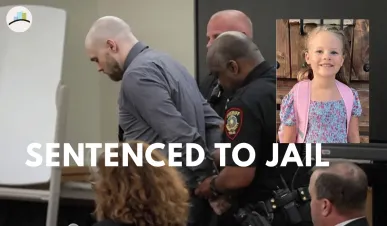
A Texas jury has sentenced Tanner Horner, a former FedEx driver, to death by lethal injection after he admitted to the kidnapping and murder of 7‑year‑old Athena Strand following a delivery at her home in Paradise, Texas in 2022. The verdict was handed down on May 5, 2026, concluding one of the most disturbing and widely followed criminal cases in recent U.S. history.
ALERT: Jury broke down in tears today while footage of Tanner Horner killing 7-year-old Athena Strand was played.
— E X X ➠A L E R T S (@ExxAlerts) April 16, 2026
They were also shown footage of Horner telling his boss that he had “thrown up” in the truck, requesting the same vehicle the next day.
The footage of the abduction… pic.twitter.com/r8h7Uso9f7
Who Was Athena Strand?
Athena Strand was a 7‑year‑old girl living with her family in Wise County, Texas. On November 30, 2022, she was last seen at her rural home awaiting a Christmas gift delivered by Horner. Her disappearance sparked a massive search and intense media coverage. Two days later, her body was found several miles from her home.
What Tanner Horner Did: Police and Court Findings
According to prosecution evidence and Horner’s own guilty plea, the 34‑year‑old abducted Athena after arriving to deliver a package. Investigators say he initially claimed he accidentally struck her with his truck, then panicked. Prosecutors showed harrowing evidence, including audio recordings from inside Horner’s delivery van capturing parts of the tragic encounter.
Medical examiners determined that Athena died from blunt force injuries, smothering and strangulation. The jury also heard testimony suggesting potential sexual assault, with DNA evidence linking Horner to the crime.
The Trial and Death Sentence
"I thought it was funny."
— i Report Racism & Child Crimes (@SeeRacists) May 5, 2026
Video shows Tanner Horner, the FedEx driver who kidnapped and m*rdered and likely R*ped 7-year-old Athena Strand Prosecutors said.
Horner said he "thought it was funny" to strip off her clothes before k*lling her. pic.twitter.com/oqun3IDo07
Horner pleaded guilty to capital murder and aggravated kidnapping in April 2026, moving directly to the sentencing phase of the trial. Over 19 days of testimony, jurors heard damning evidence before unanimously choosing the death penalty over life imprisonment without parole.
The judge ordered that Horner be held in custody of the Texas Department of Criminal Justice until an execution date is eventually set, though an automatic appeal to the Texas Court of Criminal Appeals will follow under state law.
MORE ARTICLES:
Family Reaction and Court Room Statements
During sentencing, Athena’s uncle delivered a powerful victim impact statement, condemning Horner and saying he had “destroyed a family” while affirming that Athena’s memory will endure. He declared that Horner would “face the wrath of God” and would be remembered only as a painful footnote in his niece’s story.
Defense Arguments and Mental Health Issues
Horner’s defense attempted to avoid the death penalty by highlighting his troubled life, citing mental health conditions including bipolar disorder, anxiety and autism along with a difficult childhood. They argued these factors reduced his moral culpability. However, the jury ultimately found that he posed a continuing danger and upheld the death sentence.
What Happens Next: Appeals and Execution Timeline
Although Horner has been sentenced to death, no execution date has been set yet. Under Texas law, death penalty sentences must be reviewed through an automatic appeals process, during which the Texas Court of Criminal Appeals will determine whether the sentence stands. Only after the appeals process is exhausted which can take years will an execution date potentially be scheduled.
Why This Case Drew National Attention
The murder of Athena Strand shocked both local and national audiences due to:
- The victim’s young age
- The perpetrator’s position as a trusted delivery driver
- The disturbing audio and video evidence presented in court
- The emotional reactions from family members
- The debate over justice, mental health defenses, and capital punishment
The case has reignited conversations on public safety, child protection and the death penalty in the United States.



