
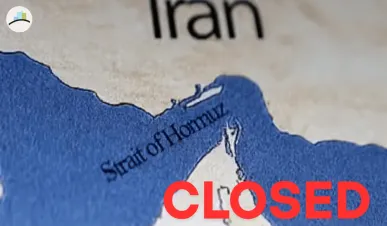
A major global flashpoint has intensified once again as Iran announced it has placed the Strait of Hormuz under “strict control”, raising urgent questions about whether one of the world’s most critical oil routes is effectively closed again.
The sudden shift comes just a day after signals that the waterway had reopened creating confusion, tension, and renewed fears across global markets.
What Happened to the Strait of Hormuz?
In the latest development, Iranian military officials said control of the Strait of Hormuz has “reverted to its previous state” under strict armed forces management.
Iran's military said the Strait of Hormuz is closed again, prompting ships to turn back https://t.co/DA6jRvsFjJ
— The Wall Street Journal (@WSJ) April 18, 2026
This effectively means:
- Movement through the strait is heavily restricted
- Ships may require approval or may be turned away
- The situation remains uncertain and highly volatile
The announcement reverses earlier claims that the route had been reopened for commercial traffic just hours before.
Why Did Iran Tighten Control Again?
Iran says the decision comes in response to the ongoing U.S. naval blockade of Iranian shipping.
Officials have accused the U.S. of:
- Violating agreements
- Blocking Iranian vessels
- Engaging in what they described as “maritime piracy”
As long as the blockade continues, Iran has signaled that full access to the strait will not return.
Is the Strait of Hormuz Fully Closed?
Not exactly but it’s far from normal.
Here’s the real situation:
- Some ships have attempted to pass
- Others have reportedly turned back
- Access appears controlled, limited, and unpredictable
There have also been reports of gunfire incidents involving vessels, further escalating concerns.
So while not officially “completely shut,”
it is effectively restricted enough to disrupt global trade
Why the Strait of Hormuz Matters So Much
The Strait of Hormuz is one of the most critical chokepoints in the world.
- Around 20% of global oil supply passes through it
- It connects the Persian Gulf to global markets
- Any disruption immediately impacts oil prices and global economies
This is why even partial restrictions send shockwaves worldwide.
How the Crisis Escalated
The current situation is part of a larger conflict involving Iran and the United States.
Here’s the timeline:
- The strait was closed earlier during the war
- A temporary reopening was announced during a fragile ceasefire
- The U.S. continued its naval blockade
- Iran responded by reimposing strict control again
This back-and-forth has created a pattern of:
open → restricted → open → restricted
MORE ARTICLES:
Global Impact: Why the World Is Watching Closely
The uncertainty around the strait is already affecting:
- 🚢 Global shipping routes
- ⛽ Oil supply chains
- 📈 Energy prices and inflation
Experts warn that prolonged disruption could trigger:
- Fuel shortages
- Price spikes
- Wider economic instability
The Bigger Picture
At the center of this crisis is not just a shipping route but a broader geopolitical conflict that continues to evolve rapidly.
With tensions still high and no clear resolution in sight, the status of the Strait of Hormuz remains one of the most closely watched developments in the world right now.



