
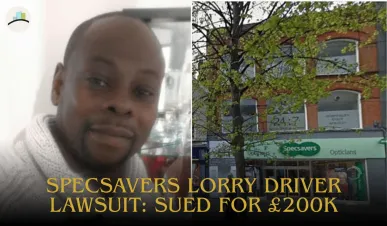
A UK lorry driver is taking on optical giant Specsavers in a dramatic legal battle after a routine eye test allegedly ruined his career. The driver claims that an inaccurate vision assessment left him unable to continue working — costing him his livelihood and livelihood prospects. Now he’s suing for a whopping £200,000 in damages, and the case is raising serious questions about eye exam standards, driver safety, and corporate responsibility in the optical industry.
What Happened to the Driver?
According to reports, the driver — whose job depended on holding a commercial driving licence — visited Specsavers for a mandatory eye test required by UK law. After the test, he was told his vision did not meet the minimum standards for driving heavy goods vehicles (HGVs). As a result, he lost his licence and, subsequently, his job.
This isn’t a small matter of inconvenience. For a professional driver, losing a licence means losing the ability to earn a living. What started as a routine check then turned into a life‑altering catastrophe — at least that’s what the driver’s lawsuit alleges.
The Legal Claim: Why £200,000?
The driver has filed a claim against Specsavers for £200,000 — a sum intended to cover:
-
Loss of current and future earnings
-
Emotional distress and personal hardship
-
Costs associated with medical and licensing appeals
-
Loss of career prospects
His legal team argues that the eye test was negligently performed or interpreted, leading to a false negative result. If proven, Specsavers could face a crippling payout and enormous reputational damage.
What Specsavers Says
Specsavers has declined to comment on the specifics of the case — which is now underway — but has said that all eye tests are conducted by trained professionals following industry standards.
The company did confirm that it would defend the claim, signaling it contests the allegations and stands by its testing procedures.
Why This Matters: Safety vs. Livelihood
On the surface, eye tests exist for a simple reason: to ensure that drivers are safe on the road. The UK’s licence requirements include regular vision checks because poor eyesight can lead to serious accidents. But when those checks aren’t accurate, there’s a problem.
For the driver in this case, losing his licence didn’t just mean taking a break — it meant an immediate end to his career. With bills to pay, responsibilities to uphold, and no straightforward way to work without a licence, his situation sheds light on a deeper issue:
👉 What happens when standardised health checks go wrong?
👉 Who is accountable when a test destroys a person’s livelihood?
👉 Are big corporations properly safeguarding workers’ futures?
These questions are now at the center of the case.
MORE ARTICLES:
Industry Fallout: Could This Change Eye Testing Standards?
If the driver wins his lawsuit, the implications could be massive:
-
Increased scrutiny of eye testing procedures
-
Higher liability for clinics and optical chains
-
Legal precedent for other professionals affected by medical testing errors
-
Calls for standardised oversight and improved testing protocols
Ophthalmologists, driving bodies, and safety advocates are already watching closely. Many are asking whether this case could reshape the way commercial eye tests are conducted across the UK — and even beyond.
Voices and Reactions
This case has divided public opinion:
-
Supporters of the driver say:
“If Specsavers failed him, they should pay. A life and career were affected.” -
Sceptics argue:
“Safety comes first. If his eyesight didn’t pass the minimum standard, the test did its job.”
Either way, the emotional human story — a driver who lost his career — is stirring powerful reactions. On social media, many weigh in:
➡ “No job = no income. Specsavers should be accountable.”
➡ “If the sight was genuinely bad, they saved lives.”
➡ “How often are these tests wrong?”
The lawsuit doesn’t just affect one man — it has become a touchpoint for national debate on workplace safety, corporate responsibility, and justice in healthcare.
What Could Happen Next
The case is currently heading through the courts, and evidence from both sides will be reviewed. If the driver succeeds, Specsavers may have to pay the £200,000 — and possibly face similar claims from others.
Even if Specsavers wins, the controversy could lead to:
🔹 Revised eye test standards
🔹 Stricter regulatory oversight
🔹 New legal guidelines on liability
🔹 Increased insurance claims in the optical industry
This story could have ripple effects far beyond this single case.



