
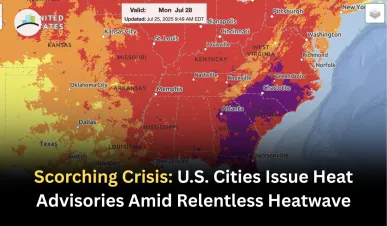
Across a huge stretch of the United States, cities are under a serious heat advisory. And this isn’t just about sweating a bit more. Cities like Memphis, Indianapolis, St. Louis, and Little Rock are being hit with intense, record-threatening heat. With temperatures soaring past 100°F and heat indexes reaching 110°F in some regions, the National Weather Service has urged people to avoid going outside for long periods — because this kind of heat isn’t just uncomfortable, it’s dangerous.
From kids playing outside to workers on job sites, everyone’s at risk. Power grids are struggling, ERs are busier than usual, and air conditioners are running non-stop — if people are lucky enough to have them. It’s not just one or two states either. Over 90 million Americans are currently living under some form of heat advisory this week.
Here’s What This Kind of Heat Can Actually Do to You
The truth is, extreme heat can mess with your body — fast. A lot of people don’t realize how serious it can get. We’re not just talking about feeling tired or sweaty. We’re talking about:
-
Heat exhaustion: It causes dizziness, nausea, headaches, and muscle cramps.
-
Heat stroke: This is deadly if untreated. It can raise your body temp to 104°F+ and affect the brain.
-
Dehydration: The faster you sweat, the faster your body loses water, salt, and essential minerals.
-
Heart stress: For older folks or people with health conditions, extreme heat can trigger heart attacks or strokes.
-
Mental health: Studies show that excessive heat can lead to increased anxiety, irritability, and fatigue.
So when officials issue a heat advisory, it’s not just for show. It’s a real warning. And it affects every part of life — health, safety, economy, and even food supply chains.
Heat Advisories Are the New Normal — And That’s Alarming
It feels like this has become a regular thing now. Every summer we hear about heat records breaking. But what’s scary is that it’s not normal — it’s the result of rising global temperatures. And experts say these conditions are only going to get more frequent and intense.
What’s worse is how unprepared we still are. Power outages in some cities have already started as demand spikes. And for people without stable housing or AC, a heat advisory might as well be a death sentence. Cities need long-term plans, but for now, even short-term responses are falling short.
Precautions Everyone Should Be Taking Right Now
If you or someone you know lives in one of the areas affected, here are some must-follow precautions:
-
Stay indoors during peak hours (12 PM – 5 PM).
-
Drink lots of water — even if you’re not thirsty.
-
Avoid caffeine and alcohol, which cause dehydration.
-
Keep curtains closed to block out sunlight and keep rooms cool.
-
Don’t leave kids or pets in parked cars — not even for a minute.
-
Use fans if AC isn't available, and consider going to public cooling centers.
-
Wear light-colored, loose-fitting clothing.
Heat-related illnesses creep up fast. It’s better to take these steps now than wait for symptoms to show.
What Cities and Officials Aren’t Talking About Enough
While everyone’s talking about the heat itself, there’s less discussion about how this is going to impact jobs, healthcare, and even the economy. Here’s what isn’t getting enough attention:
-
Outdoor labor is becoming unsafe. Construction, agriculture, delivery — all at risk.
-
Food security may take a hit if crops keep suffering under these conditions.
-
Energy infrastructure is vulnerable. If blackouts increase, it could lead to heat emergencies and even civil unrest in extreme cases.
-
Public health budgets may not be enough to handle a rise in heat-related illness.
The truth is, we need climate adaptation measures now, not in a few years.
Final Thoughts: This Heat Advisory Is a Wake-Up Call
Honestly, it feels like we’re on the edge of something bigger. These heat advisories are not isolated. They’re signs that we’re entering a future where summers are going to be more punishing — not just for the planet, but for people, systems, and cities. Whether it's climate action, infrastructure, or community health — it’s time for the U.S. to treat heat as the emergency it truly is.



