
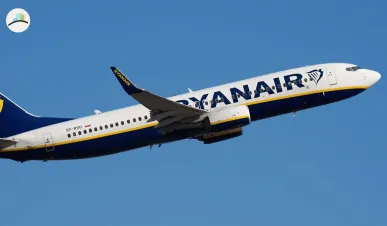
Up to 50 Ryanair Passengers Stranded at Athens Airport After EU Biometric Border System Causes Mega-Queue on Flight to London Luton
Between 20 and 50 passengers missed Sunday's Ryanair service from Athens International Airport to London Luton after "mega-queues" at passport control left them unable to reach the boarding gate before it closed, in the latest incident linked to the EU's new Entry/Exit System.
Dozens of Ryanair passengers were left stranded at Athens International Airport on Sunday, June 15, 2026, after lengthy queues at passport control caused them to miss their flight to London Luton, in the latest disruption linked to the European Union's new biometric border regime.
What happened
Between 20 and 50 passengers missed Sunday's flight from Athens International Airport to London Luton, according to the BBC. The incident is the latest to fuel concerns over delays linked to the EU's new Entry/Exit System, which was introduced to tighten border security across Europe.
Other Stories-
-Nintendo Data Breach Statement: Company Responds After Reported Employee Data Exposure
Around 20 to 50 passengers reportedly missed their flight from Athens International Airport to London Luton on Sunday after "mega-queues" formed at passport control and security. Passengers were left stranded in Greece after their flight left without them.
Milo Boyd, a journalist from The Mirror who successfully boarded the flight, said he did not have his fingerprints scanned when he entered or left Athens. He said there was a "mega-queue" of hundreds of passengers at security and passport control. Some passengers reportedly grew so frustrated that airport staff had to step in to maintain order.
What Ryanair and Athens Airport said
Ryanair blamed border delays for the disruption, while Athens International Airport pointed to congestion caused by "additional processing requirements," though neither directly said the EES was responsible.
Athens International Airport said it was experiencing "increased processing times as new border-control procedures continue to be implemented and refined."
Ryanair said in a statement: "All passengers that were at the boarding gate when this flight from Athens to London Luton boarded, travelled without incident."
What is the EU Entry/Exit System
The new European Union Entry/Exit System is a fully automated digital border check framework that replaces passport stamping for most non-EU travellers entering and leaving the Schengen area. It has been fully operational since April 10, 2026 at external Schengen borders, including airports. EES collects biometric data including facial images and fingerprints for non-EU short-stay visitors — replacing manual passport stamps. The system applies to both visa-exempt travellers and those requiring visas for short stays.
Since it was implemented, EES has faced a number of operational hurdles, which has led to the EU border agency Frontex to warn that the system may take up to two years to fully stabilise.
Greece's contradictory position
Greece's tourism minister Olga Kefalogianni previously indicated in April that British nationals would not face biometric checks when travelling to the country this summer to avoid "burdening" them with bureaucracy. However it is not clear whether that exemption still applies because the Greek Foreign Ministry later appeared to reverse the promise, saying it had no information that "specific nationalities are temporarily exempt from the relevant procedure."
A pattern of disruption across Europe
The Athens incident is not isolated. On May 30, 2026, a Ryanair flight from Toulouse to London departed on schedule, but due to extremely long queues at border control, roughly 150 passengers were unable to reach the boarding gate in time and were left behind.
Ryanair, Europe's largest low-cost carrier, has publicly called on governments in all 29 participating Entry/Exit System countries to suspend the new border regime until after the 2026 summer season, arguing that existing infrastructure and staffing levels are not yet adequate to handle peak volumes without widespread disruption.
Airports across France, Germany, Spain, Italy and other Schengen countries have reported longer passport queues and slower processing times, particularly for non-EU travellers. Some countries, such as Greece and Portugal, have temporarily suspended biometric checks under EES at certain entry points during peak periods in an effort to ease congestion.
Passenger rights
The disruption raises questions over passenger rights and compensation. Under EU Regulation 261, airlines can be required to provide reimbursement, rerouting and in some cases cash payments when travellers are denied boarding or miss flights because of issues considered within the carrier's control. However, when delays stem primarily from airport or border-control processes, responsibility becomes more complex. Whether stranded passengers are entitled to compensation in this specific incident has not been officially confirmed by Ryanair or any consumer authority.
The unique angle worth noting: Greece finds itself in a uniquely contradictory position among EES-affected countries. Its tourism minister publicly promised British travellers they would face no biometric checks this summer — a commitment that would have provided clear consumer guidance — before the Greek Foreign Ministry walked back that promise entirely. That reversal left British travellers heading to Greece with no clear official guidance on what to expect at departure, and no basis on which to plan their airport arrival time. The Athens stranding on June 15 is a direct consequence of that policy confusion.



