
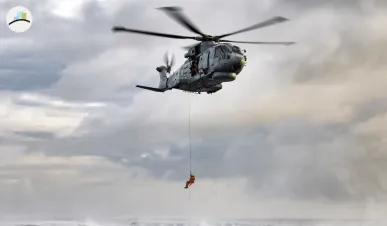
A Royal Navy helicopter has crashed into a field near Okehampton in Devon, southwest England, prompting a major emergency services response and an ongoing investigation by the UK authorities. The aircraft, confirmed by police and the Ministry of Defence to be a Royal Navy aircraft, came down on Wednesday morning at Sourton Down, leaving several roads closed and local residents and motorists shaken by the dramatic incident.
What Happened: Crash Details
Devon and Cornwall Police say they were called to the scene after a Royal Navy helicopter crashed into a field near Sourton Down, close to the A386 and A30 roads in Devon. The incident occurred in the early hours of Wednesday, with initial emergency calls coming in shortly before dawn.
Emergency services — including police, fire crews and ambulance personnel — responded rapidly. Officers have put in place multiple road closures in the area around the A386 and A30 Sourton Cross slip roads and services to secure the scene and allow rescue operations to proceed safely.
At this stage, authorities have confirmed the helicopter’s identity as a Royal Navy aircraft, but have not released detailed information about the model or squadron.
Response and Ongoing Investigation
The Ministry of Defence (MoD) acknowledged the crash and said it is treating the incident seriously, with an investigation now underway to determine the cause of the crash. MoD spokespeople have said it would be inappropriate to comment further until more facts are established.
Devon and Cornwall Police described the incident as ongoing and urged members of the public to avoid the area. Authorities have said they will provide more updates as they become available.
Road Closures and Public Impact
Local traffic has been significantly affected by the crash response, with police enforcing closures around key junctions:
- A386 near Okehampton
- A30 near Sourton Cross
Drivers are being diverted and urged to plan alternative routes to avoid delays. These measures are expected to remain in place while emergency crews and investigators work at the scene.
Speculation About What Happened
At this early stage, officials have not speculated publicly on the cause of the crash. Eyewitnesses and social media users in the area reported hearing loud noises in the hours before the crash, possibly linked to multiple aircraft movements around the site — though this has not been confirmed by authorities.
Weather conditions on the day featured typical southwest UK early‑morning dampness and breezes, but there’s no official indication yet that weather contributed to the incident. Aviation experts caution that numerous factors — from mechanical issues to procedural or navigational errors can play a role in military helicopter incidents, and investigators will be combing through flight data and witness accounts in the coming days.
What We Know So Far
Confirmed:
- A Royal Navy helicopter crashed into a field at Sourton Down, near Okehampton in Devon.
- Emergency services are on site and multiple roads remain closed.
- Devon and Cornwall Police and MoD have confirmed the incident and launched an investigation.
Unconfirmed:
- The number of people on board.
- Whether there are any injuries or fatalities.
- What caused the helicopter to crash — mechanical failure, pilot error or other factors.
Officials say they will update the public as verified information emerges from the investigation.
Helicopter Incidents and Safety
Military helicopters like those operated by the Royal Navy regularly undertake training exercises and missions that can involve complex flying conditions. While many flights are routine, any crash involving military aircraft triggers both military and civil aviation safety inquiries to determine causes and recommend safety measures.
In aviation history, military helicopter crashes have prompted detailed investigations that examine everything from equipment faults to environmental factors. These include past incidents where rotor failure or engine malfunction played a role, and others where pilot training or procedural issues were factors underscoring how meticulous investigations must be.



