
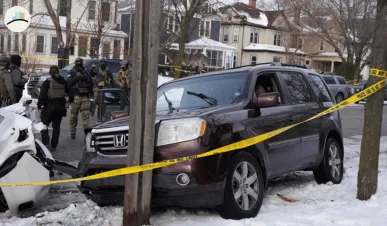
Minneapolis is reeling today as news breaks of a tragic and disturbing incident involving ICE (Immigration and Customs Enforcement) agents who shot and killed a woman. This devastating event occurred in Minneapolis, and the victim has been identified as Renee Nicole Good — a name now at the forefront of national discussions about ICE’s role in law enforcement and the growing concerns over police actions across America.
As Jacob Frey, the Mayor of Minneapolis, and other local leaders scramble to address the incident, questions swirl about what happened today, the identity of the woman shot, and the potential consequences of yet another incident involving ICE officers.
The Shooting: What We Know So Far
At 34th and Portland Avenue in South Minneapolis, a deadly confrontation took place. ICE agents were reportedly attempting to detain an individual when the shooting occurred.
Witnesses on the scene have been left shaken, describing chaotic moments followed by the immediate response of law enforcement. Eyewitnesses claim that ICE agents shot the woman, later identified as Renee Nicole Good, in what local authorities are calling an escalated interaction.
It is literally the Battle for the Soul of America
— The Resistor Sister®️♥️🇺🇸 (@the_resistor) January 8, 2026
Good v. Evil
R.I.P. Renee Nicole Good
Such a Tragedy. pic.twitter.com/vKljEcgWRc
The fatal shooting has sparked anger and confusion among Minneapolis residents, with many taking to social media to express their outrage at the involvement of ICE agents in such an incident. What remains unclear is whether this was a direct confrontation or part of a broader effort to confront illegal immigration. But one thing is certain — Renee Nicole Good’s death has escalated tensions in a city already grappling with the legacy of George Floyd’s tragic death.
Who is Renee Nicole Good?
Renee Nicole Good has become a name that now stands at the center of controversy, as people begin to uncover more about her background. Friends and family have described her as a woman of resilience, but also someone who has been caught in the crossfire of a complex, strained system. Social media profiles reveal that she was active on platforms like Facebook and Instagram, where she frequently posted about family, politics, and the state of the nation’s ongoing struggles with inequality.
-
Renee’s age was reported as 37, and while little else is known about her life, what is clear is that she was caught in a tragic moment of law enforcement history that will likely ignite further debate about the role of ICE agents in civilian interactions.
The Growing Role of ICE in Law Enforcement: What Does This Mean for Minneapolis?
This ICE shooting is one of many incidents where law enforcement agencies have faced increased scrutiny over their handling of civilian encounters, particularly in cities with already strained relations between the public and law enforcement. In Minneapolis, local protests and unrest are already rising as community leaders call for an investigation into the fatal shooting.
Mayor Jacob Frey, who has already been criticized for his handling of law enforcement matters in the past, is now under immense pressure to take action. His office has stated that the incident is under investigation and that full transparency is essential. However, many are questioning whether that is enough. Local politicians and national activists have called for a complete rethinking of ICE's role in urban policing.
What Happened Today in Minneapolis: The Aftermath of the ICE Shooting
In the aftermath of the shooting incident, Minneapolis has been the scene of growing protests, with people demanding accountability and justice for Renee Nicole Good. As the investigation unfolds, more details are expected to emerge about the role of ICE agents and the broader implications of this event in the context of national protests against law enforcement tactics.
This shooting has the potential to become a flashpoint in the ongoing discussions about the presence of federal agencies like ICE in cities where they are not always welcome. The outcome of this case could have ripple effects across the country, influencing how ICE operates in relation to cities like Minneapolis.
What This Means for ICE and the Future of Law Enforcement in America
The death of Renee Nicole Good has sparked urgent questions:
-
Are ICE agents police? This question is now front and center in discussions about accountability, as the lines blur between federal agencies and local law enforcement.
-
Should ICE have the same powers as local police officers? Many are questioning the effectiveness and legitimacy of ICE interventions in places that aren’t directly connected to border enforcement.
-
What happens now? Minneapolis is no stranger to protests and calls for police reform, but this new chapter could deepen divides and force a more comprehensive national conversation about federal law enforcement powers.



