
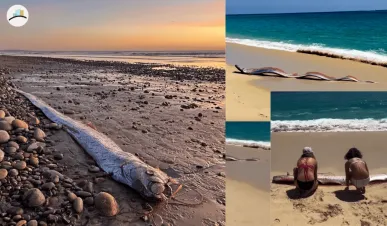
Something extraordinary washed up on the sandy shores of Cabo San Lucas, Mexico recently — not once, but twice in a single moment. Two massive, ribbon‑like deep‑sea creatures called oarfish appeared near the shoreline, creating a blend of awe, folklore, and scientific curiosity that’s now spreading around the world.
A Surreal Beach Encounter
Visitors to the beach were stunned when something unusually bright and long appeared in the shallow water. At first glance, it looked unreal — like something from a movie. As the figures got closer, onlookers realized they were witnessing not one, but two giant oarfish, each possibly stretching up to 30 feet in length.
Two sisters spotted a rare oarfish struggling in shallow waters while walking along a beach in Cabo San Lucas, Mexico.
— The CSR Journal (@thecsrjournal) March 11, 2026
Often called the “doomsday fish”, the deep-sea species rarely surfaces. The viral video revived myths linking its appearance to natural disasters.#Oarfish… pic.twitter.com/0CNWkKZO19
Captured on video by witnesses and rapidly shared across social media platforms, the sighting includes footage of beachgoers — including two sisters — instinctively helping the struggling fish back toward deeper water. One sister, unable to stand by while a creature appeared to be in distress, waded in to offer assistance while others joined in.
Why It’s So Rare
Oarfish are elusive residents of the deep ocean, usually found thousands of feet below the surface. They are rarely seen by humans because they inhabit remote ocean depths where sunlight barely reaches.
Seeing even a single oarfish near the surface is unusual. Seeing two in the same place and time is exceptionally rare — something that has fascinated scientists and the general public alike.
Other Stories
-Is Iran Israel War Stopped? Ceasefire, Who Started It & Latest News 2026
Folklore Meets Reality
In various coastal traditions — especially in Japan — oarfish sightings have long been linked to legends of impending natural disasters, such as earthquakes or tsunamis. This is where the ominous nickname “doomsday fish” comes from.
But while these folk beliefs are powerful and dramatic, scientists point out that there’s no evidence connecting oarfish appearances to catastrophic events. Experts emphasize that beach sightings are random natural occurrences likely tied to environmental or biological factors, not impending disaster.
Public Reaction and Viral Spread
The video shared online has captivated millions of viewers, with reactions ranging from fascination to humor to genuine concern. Some social‑media users playfully speculated about signs of the end times, while others praised the quick thinking and compassion of those who tried to help the fish.
This viral moment highlights how quickly unusual natural phenomena can ignite both curiosity and anxiety in the digital age.
What Scientists Say
While oarfish sightings are rare, researchers view them as valuable opportunities to learn more about species that spend most of their lives hidden in the deep ocean. These fish grow long, slender bodies and are among the longest bony fish in the world, but their behavior, migration patterns, and vulnerability to environmental shifts remain areas of active study.
Scientists remain clear: rare as they are, oarfish appearances are not reliable predictors of natural disasters, and their sudden appearance near shorelines should be interpreted with curiosity — not fear.
Looking Ahead
The Mexico sighting is a reminder of how much of the deep ocean still remains unexplored and how natural world mysteries continue to surprise us. For now, this rare double encounter stands as an extraordinary moment of intersection between science, folklore, and human wonder — all sparked by two humble sea creatures that briefly came ashore and captured the world’s attention.



