
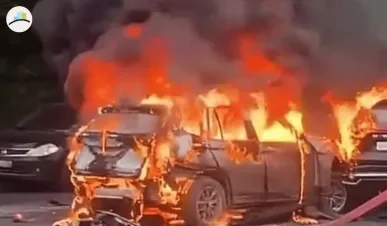
A senior Russian military official has been killed in a car bomb explosion near Moscow in the early hours of June 9, 2026, according to multiple media reports and Russia’s Investigative Committee. The blast occurred in the Balashikha suburb, east of the capital, and officials have opened a criminal case as investigations continue into the cause and motive behind the attack.
#BREAKING RUSSIAN MILITARY OFFICIAL HAS REPORTEDLY BEEN ASSASSINATED IN A CAR BOMB ATTACK NEAR MOSCOW pic.twitter.com/D2jRVSfxFI
— MCBN (@MCBNNEWSS) June 10, 2026
What Happened in Balashikha?
According to Russia’s federal Investigative Committee, an explosive device detonated as a military official drove in Balashikha’s Aviatorov neighbourhood at around 5:30 a.m. local time. Local authorities confirmed that a criminal case has been opened following the blast.
Social media clips circulating online show the officer’s BMW bursting into flames after the blast, and bystanders rushing to pull him from the wreckage. However, he was pronounced dead at the scene.
While official statements have not publicly named the victim, opposition Russian media outlets and war‑monitoring Telegram channels have identified him as Damir Davydov, a senior military official linked to the Defence Ministry’s missile and artillery department.
Investigation and Official Response
The Russian Investigative Committee and regional prosecutor’s office confirmed the explosion and said they are conducting a criminal investigation, but they have not commented on possible suspects or motives.
Authorities have not publicly confirmed whether the blast was a targeted assassination or an act of terror. No group has claimed responsibility, and there is no official attribution to foreign entities as of now.
Context: A Pattern of Attacks?
Although the June 2026 incident has unique details, it comes amid a broader pattern of violent attacks targeting senior figures within Russia’s military and security structures over the past several years. Separate car bombings and explosive attacks have killed high‑ranking officers in Moscow and its suburbs — most notably in late 2025, when a general was killed in a similar blast in the same region.
Security analysts and international observers say such acts, whether politically motivated or otherwise, have raised concerns about internal security and the protection of key officials, especially given Russia’s ongoing military engagements. However, investigators have not publicly linked the latest blast to any foreign government, domestic dissidents or specific armed groups.
Balashikha and Moscow’s Security Concerns
Balashikha, while primarily residential and suburban, has in recent years been the location of major incidents involving explosive devices and threats to high‑profile figures. The city’s proximity to Moscow means that any violent event there prompts swift investigative and security responses by national authorities.
The ongoing investigation may include forensic analysis, witness interviews, and examination of surveillance footage from the area. Officials are also expected to review vehicle footage and other digital evidence that could shed light on how the explosive device was placed and triggered.
MORE ARTICLES:
What This Could Mean
The killing of a senior military official in a car explosion inside Russia’s heartland is significant both politically and socially. Such incidents often prompt internal reviews of security protocols and sometimes lead to broader public narratives about foreign threats or domestic unrest.
As the investigation continues, Russian authorities will likely face pressure to provide more detailed explanations of what happened, who was responsible, and what measures are being taken to prevent similar tragedies.



