
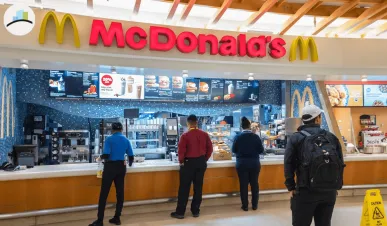
Ever found yourself staring at your total at McDonald’s, wondering why your burger came out to $5.01 instead of a nice round number? Well, now you’ll never have to worry about that again. McDonald’s has just introduced a new policy to address the ongoing penny shortage in the U.S. – and the change could affect how you pay for your next Happy Meal.
In a move that is shocking some, and welcomed by others, McDonald’s is now rounding the final price of your order to the nearest nickel—if you’re paying in cash. No, this isn’t just a temporary fix—it’s part of the growing crisis around the penny shortage. With pennies becoming harder to come by, McDonald’s is taking action to make sure cash payments are a little less frustrating for both customers and staff.
Why This Change is Happening – And Why It Matters to You!
You’re probably wondering: Why would McDonald’s change the price of my fries or burger just because of pennies? It’s a good question, and here's why it matters:
-
The Penny Shortage: The U.S. Mint has been struggling to keep up with the demand for pennies, and it costs more to make a penny than it’s worth. In fact, it costs about 3.7 cents to mint each penny, meaning the government has been losing money every time they produce them. (That’s right, we’re losing money to make money!)
-
Simplifying Payments: McDonald’s, being the massive fast food giant it is, doesn’t want you to have to wait at the counter while the cashier struggles to find those elusive pennies. With this new policy, cash transactions will be rounded to the nearest 5 cents, making the transaction smoother and quicker.
-
The Bigger Picture: McDonald’s is not alone in this. Around the world, many countries have done away with small coinage altogether. McDonald’s just seems to be the first U.S. brand to make this move. Is this the beginning of the end for pennies? Only time will tell!
MORE ARTICLES:
How Will This New System Work for You?
Okay, so let’s break it down for the cash‑paying customer. When you make a purchase, McDonald’s will now round the final total to the nearest nickel. Here’s how it works:
-
If your total ends in .01 or .02 cents, it gets rounded down to .00.
-
If your total ends in .03 or .04 cents, it will be rounded up to .05.
-
If it ends in .06 or .07 cents, it will be rounded down to .05.
-
If it ends in .08 or .09 cents, it will be rounded up to .10.
-
If the total already ends in .00 or .05, there’s no change.
Now, keep in mind, this policy only affects cash transactions. If you’re paying with cards, Apple Pay, or the McDonald’s app, your total stays exactly as is. No rounding necessary.
What Does This Mean for You?
It might seem like a minor change, but there are some bigger implications behind this shift:
-
Faster Transactions: If you’ve ever been stuck at the register waiting for a cashier to find that one penny, you’ll appreciate this new system. No more wasting time over fractions of a cent!
-
A Step Toward the End of Pennies: This change might be a sign of things to come. As the penny becomes more and more impractical, McDonald’s is adapting to a future where small change is phased out. Could we be headed towards a coinless future in America?
-
No Need to Worry About Exact Change: For those who always worry about having the exact change (and let’s be real, we all do), this new system will ease your concerns. With prices rounded to the nearest nickel, you won’t have to deal with the stress of pennies ever again!
What’s Next? The End of the Penny Era?
-
More Businesses Will Follow: McDonald’s is just the first major chain to adopt this rounding policy, but other retailers and fast food chains may soon follow. Will we see more businesses adopting nickel rounding as the standard?
-
Public Reaction: While some customers might be upset by the change (especially those who prefer precise change), others will see it as a much‑needed convenience.
-
The Future of U.S. Currency: If the penny continues to be phased out, will other coins follow? This is a critical question for U.S. currency in the coming decades, and McDonald’s is just the first major player to take a step in this direction.
As McDonald's embraces this new rounding system, it marks the beginning of what could be a larger shift in how we handle small change in everyday transactions. While some may see it as a minor tweak, it speaks to a much broader issue—the future of currency and how businesses adapt to changing economic realities. With more companies likely to follow suit, this change could be a sign of things to come. Whether it’s the end of pennies or just a temporary fix, it’s clear that the way we pay is evolving—and McDonald’s is leading the charge in making sure that the future of payments stays smooth and efficient.



