
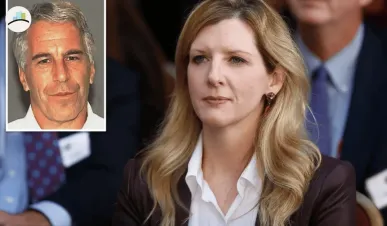
In a stunning development that has sent shockwaves through Wall Street, Goldman Sachs’ Chief Legal Officer and General Counsel, Kathy Ruemmler, has announced her resignation following revelations linking her to Jeffrey Epstein, the disgraced financier and convicted sex offender. The resignation effective June 30, 2026 comes after newly released government documents exposed a far closer relationship than previously known, raising serious questions about ethics, influence, and reputational risk at one of the world’s most powerful financial institutions.
This isn’t just another executive exit at a major company. It’s a scandal that touches on politics, elite networks, ethical lines, and the tangled legacy of Epstein — and it’s reshaping how powerful institutions handle relationships with controversial figures.
Top Goldman Sachs lawyer resigns after Epstein disclosures
— Index Welt (@indexwelt) February 13, 2026
Goldman Sachs’ chief legal officer Kathy Ruemmler has resigned, CEO David Solomon said on Thursday, after recent documents by the US Justice Department showed she ac...
Find all news at: https://t.co/Hi9Qowqyms | scmp
Who Is Kathy Ruemmler?
Kathy Ruemmler is not just any lawyer. She’s one of the most accomplished legal minds in the United States — a former White House Counsel under President Barack Obama, and until recently, the top lawyer at Goldman Sachs. Before joining Goldman in 2020, she was a partner and head of white‑collar defense at a leading U.S. law firm.
Her role at Goldman placed her at the center of legal strategy, risk management, regulatory compliance, and reputational decisions at the highest level of one of Wall Street’s most elite institutions.
What the Documents Reveal
The sudden resignation stems from emails and internal documents released recently by the U.S. Department of Justice that shed new light on her interactions with Jeffrey Epstein not merely as a distant acquaintance but as a personal confidant and adviser in some cases.
According to reports:
-
Ruemmler referred to Epstein as “Uncle Jeffrey” in emails.
-
She received luxury gifts from him, including designer items, even after his 2008 conviction for sex crimes involving minors.
-
The correspondence included personal exchanges, career advice and discussions about media strategies related to his legal troubles — even after Epstein was accused again in 2019.
-
Some messages included affectionate sign‑offs and references that portrayed a far more informal relationship than previously acknowledged.
These revelations come months after over 3 million pages of files related to Epstein were released, and she became one of the most prominent names caught up in the fallout.
Why It Matters and Why It Blew Up
Goldman Sachs has strict rules regarding conflicts of interest, gifts from clients, and reputational risk especially for someone in Ruemmler’s position. High‑value gifts or cozy relationships with controversial figures can violate internal codes and raise serious ethical questions.
Although Goldman initially defended her noting that her interactions with Epstein predated her time at the bank and were “appropriate” the released documents undercut that narrative. The public reaction, media scrutiny, and concern from investors and regulators eventually made her position untenable.
Goldman CEO David Solomon acknowledged her resignation, praising her contributions but ultimately accepting that the situation had become a distraction.
The Fallout and Bigger Questions
This development raises broader concerns beyond just one executive:
-
How deep do Epstein’s connections go within elite professional networks?
-
What does it mean for institutional ethics when powerful lawyers appear alongside controversial figures?
-
Will this prompt stronger compliance measures or cultural change at global financial institutions?
MORE ARTICLES
Legal and corporate ethics experts say this episode underscores how reputational risk can outweigh even decades of distinguished service when a leader becomes entangled in controversy even if that involvement occurred years prior.
What Happens Next?
Ruemmler will remain in her role until June 30, 2026, ensuring a transition period. Goldman Sachs is expected to appoint a successor who will oversee legal strategy during a sensitive period for the bank, as regulators and investors continue to monitor fallout from the Epstein files.
In her resignation, Ruemmler said she felt the media attention on her past work had become a distraction and that her responsibility was to put Goldman Sachs’ interests first.
What This Scandal Says About Power and Accountability
This story isn’t just about a resignation it’s about the intersection of power, influence, and accountability. A lawyer who once advised a U.S. president and stood at the helm of one of the most influential companies in finance saw her career shake dramatically because of past connections to one of the most notorious figures of recent decades.
It’s a reminder that in an era of mass document disclosures and public scrutiny, no reputation is untouchable and decisions made years ago can resurface with powerful consequences.



